Horizontal Rule

Roma Rights 1, 2010: Implementation of Judgments

26th, July, 2010


What Happened to the Promise of D.H.?

Lydia Gall and Robert Kushen1

In D.H. and Others v The Czech Republic, the case of 18 Romani applicants from Ostrava in the Czech Republic, the European Court of Human Rights (ECtHR or the Court) handed down a groundbreaking decision defining discrimination of Romani children in access to education.2 The promise inherent in the judgment: fair treatment, equal educational opportunities and finally real improvement in the situation of Roma – was at that time unparalleled. However, more than two and a half years later and despite continuous efforts by local and international NGOs to push the Government to adhere to its international obligations, few changes have been brought to secure the abolishment of segregation within the Czech education system, in particular as it concerns Roma, and to promote the inclusive education of Romani children.

Background

Quality education lies at the core of any community’s potential for economic and social progress and Roma face widespread discrimination in the field of education. In view of the above, the European Roma Rights Centre (ERRC) sought to address the problem of discrimination in part through litigation. In the Czech Republic as elsewhere, this discrimination manifested itself (in part) in seemingly neutral legal provisions whose effect was to disproportionately track Romani children into substandard special education. In 1998, the ERRC, together with local partners, brought a test case with the aim of securing a judicial ruling stating that the tracking of Romani children into special education was discriminatory.

With statistical data gathered over a period of six months and carefully selected litigants, the ERRC and partners chose two separate legal routes to challenge the discrimination suffered by Romani children in education – through administrative review and at the Constitutional Court level, both of which failed.

As a result, in early 2000 18 Romani applicants filed a submission with the ECtHR alleging violations of Articles 3 (prohibition against degrading treatment), 6 (right to fair trial) and Article 2 of Protocol no. 1 (right to education) taken together with Article 14 (prohibition of discrimination) of the European Convention on Human Rights (ECHR or the Convention).3 The applicants contended that their placement in special schools for mentally disabled children made them suffer severe educational, psychological and emotional harm.

The judgment 

In November 2007, the Grand Chamber of the Court held the Czech government in breach of its obligation not to discriminate on the basis of racial or ethnic origin in respect of access to education. The decision was a milestone for Roma rights and for the jurisprudence of the Court, which found a violation of Article 14 in relation to a pattern of racial discrimination in a particular sphere of public life for the first time: in this case, public primary schools.4 The Court further underscored that the ECHR addresses not only specific acts of discrimination but also systemic practices that deny the enjoyment of rights to racial or ethnic groups.5 It also clarified that racial segregation amounts to discrimination in breach of Article 146 and went out of its way to note that the Czech Republic is not alone in that discriminatory barriers to education for Romani children are present in a number of European countries.7 The Court moreover stressed that, as a legal matter, it is impossible for individuals to consent to discrimination; the right to be free from discrimination cannot be waived. Each applicant was awarded 4,000 EUR in non-pecuniary damages, which were subsequently paid. The Court also required the Government to ensure non-discrimination in the field of education. The judgment, however, did not specify any remedy that would provide the applicants themselves with the quality education they had been denied.

Changes to the Czech education system

The Czech Government undertook changes in its education system while D.H. was pending before the Court and after the judgment, attempting in some manner to address the overrepresentation of Romani children in education for children with “mild mental disabilities.”

The Schools Act,8 which entered into force in January 2005, transformed the school system in that elementary schools now constitute a unified category. Special schools for pupils with “mild mental disabilities” were ostensibly abolished; these schools are now called “practical schools” and fall under the general category of elementary schools (základní školy) together with mainstream elementary schools.9

In reality, however, the eradication of remedial special schools was anything but; the schools have merely changed in name. These schools continue to offer a reduced curriculum and aim to develop “practical” skills. Such schools are still separately funded and monitored by self-governing regional authorities as opposed to mainstream elementary schools, which are funded and monitored by municipalities.10

The progression to secondary school for Romani pupils remains nearly impossible due to their primary education in practical schools following a reduced curriculum, despite the 2005 legal amendments which formally enabled these children to access secondary school education.

The result of the mere re-labelling of special elementary schools to practical elementary schools has brought little change to the reality of Romani children in the Czech education system. In fact, more than two and a half years after the judgment Romani pupils still lose out in the Czech education system.11

NGO monitoring and advocacy efforts for implementation

Although the Czech Republic had repealed the impugned national legislation by the time the judgment was issued,12 the Court emphasised the need to adopt corrective measures to provide a remedy and prevent similar discriminatory practices against Romani children in the future.13

The Committee of Ministers of the Council of Europe is responsible for overseeing and monitoring implementation of the judgment with the aim to ensure that the underlying causes of human rights violations are eliminated. The Czech government has submitted two reports to the Committee of Ministers which included information about undertaken and planned corrective and preventive measures. In addition, several national and international non-governmental organisations, including the ERRC, the Open Society Justice Initiative (OSJI) and the Roma Education Fund (REF) have submitted reports outlining serious deficiencies in the Government’s efforts to implement the judgment and the continuing discrimination against Romani children in the Czech education system.14

At the time the D.H. judgment was issued, the ERRC hosted a roundtable meeting bringing together Czech NGOs to discuss the judgment, the issues it addressed and its potential for bringing substantive change to Roma education in the country. Out of that meeting, Together to School, a coalition of Czech and international NGOs including the ERRC, was founded. The Coalition aims to make the promise of D.H. real in the Czech Republic through advocacy urging the Government to create equal opportunities for Romani children within the Czech education system and to dismantle racial barriers.

The Coalition has been very active since its founding and provides a model of NGO cooperation on Roma issues. It meets monthly to discuss developments and strategise. Since it was established, the coalition has held regular meetings with Ministry of Education officials (including Ministers Ondrej Liska and Miroslava Kopicova and Deputy Minister Klara Laurencikova, who was until recently responsible for inclusive education). It has maintained pressure on the Czech Government to remedy the violations found in D.H. The Coalition called first for a nationwide media campaign aimed at changing the prejudiced attitude of the general public toward the Roma minority, recognising that a key factor in segregation is the pressure on Romani parents by the majority society and the discriminatory prejudice of teachers. Secondly, the Coalition demanded an immediate moratorium on the placement of Romani children into classes or schools teaching according to the Framework Education Programme for Children with Mild Mental Retardation (RVP ZV LMP or Framework Programme).15 The coalition also demanded the annulment of the Framework Programme for the 2010/2011 school year because of the systemic misuse of it to justify the creation of ethnically segregated classes or schools. In addition, the Coalition requested the immediate establishment of an ethical code governing staff responsible for student assessment and school placement.

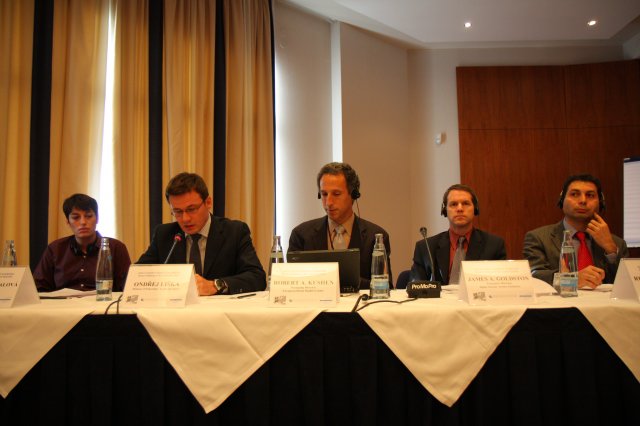
In November 2008, the ERRC, REF, Open Society Fund Prague and the coalition Together to Schools, under the patronage of the Ministry of Education, hosted a conference in Prague to review the situation in Czech schools since the D.H. decision. At this conference, the ERRC and the Roma Education Fund launched a report indicating that the number of Romani children in practical schools remained disproportionately high.16 Based on new research conducted in practical schools in 2008, the report confirmed Romani children continued to be over-represented in practical schools offering special education, laying waste to initial claims that the problem had disappeared with the 2005 legislative amendment. The research showed that in 8 out of 19 schools, Romani children accounted for more than 80% of all students. In 6 of 19, Romani children accounted for between 50 and 79% of all students and in only 5 schools did Romani children account for less than 50% of all students. As there is no official policy for ethnic data collection in the Czech Republic, it was not possible to get an accurate understanding of the discriminatory practices against Romani children in education through official sources. At the conference, the ERRC called on the Czech Government to abolish the practical schools and transfer the affected children into standard schools; short of that, the ERRC sought an immediate moratorium on the placement of Romani children in practical schools until their discriminatory admissions practices were ended.17

Government actions to give effect to D.H.

As a result of the D.H. decision, NGO advocacy and sympathetic Education Ministry officials, the Czech Government announced its intent to reform laws and regulations that encouraged the placement of Romani children in practical schools.

The most important actions undertaken to date include a series of exercises to collect data disaggregated by ethnicity on the school situation in the Czech Republic.

In 2009, the Czech Government commissioned NGOs to produce two monitoring reports related to Roma in education and inclusive education. The first study, Educational careers and educational opportunities of Romani pupils at primary schools in the neighbourhoods of excluded Romani localities,18 confirmed the disproportionate number of Romani children in practical schools. The second report19 was a qualitative study looking at how practical and mainstream schools were promoting inclusion and how well prepared they were to do so.

In 2010, the Czech School Inspection Authority conducted its own assessment of the practical schools. It identified serious violations of law and regulations in the school placement of Romani children.20 The subsequent report published in March 2010 revealed severe violations of the enrolment procedure at the special schools (invalid diagnosis of children, in the absence of valid recommendations, failure to obtain parental consent). The report further concluded that 34 schools will be fined and several others face closure due to fraudulent behaviour with granted subsidies.21 Together to School participated in preparations for the Czech School Inspection Authority visits to the former special schools and participated in some of the visits. Finally, the coalition has pushed for the Institute for Information in Education to follow up on previous investigation into the distribution of Romani children in the Czech education system, to research the conditions during the first half of 2010, including a demonstration of any positive changes as part of a year-on-year comparison.

The Government also enacted a National Action Plan on Inclusive Education (NAPIV), which is weak in terms of its content and how it is to be implemented.22 The ERRC and the Coalition were active in providing feedback on the draft NAPIV. While the NAPIV is described as an action plan, in reality it is more a framework for the development of a plan and lacks a clear timeline or targets for the transition of Romani children from practical schools to mainstream schools and for the prevention of Romani children entering those schools in the future.

The Czech Government has also undertaken a series of smaller measures which are intended to promote implementation of the judgment. In 2009, the Minister of Education sent a letter to the heads of all of the practical schools asking them to make sure that Romani children were not erroneously placed in these schools.23 The response of some teachers and other officials involved in the practical schools was to deny the problem existed, suggesting that resistance from the special education bureaucracy to real change will be fierce.24 The Government also produced new informed consent requirements for the parents and legal guardians of Romani children before these children could be enrolled in non-standard schools.25 Zvule Prava, one of the members of Together to Schools, was active in providing feedback on amendments to two Decrees (72 and 73) that incorporated revised regulations concerning informed consent designed to ensure that Romani parents understood the consequences of sending their children to practical schools.

Segregation persists

Despite rudimentary government efforts to address discrimination in education against Romani children, more than two years after the judgment, there has been little effective change in the Czech education system and Romani children are still being segregated. Government statistics confirm that 30%of Roma are still being placed in practical schools compared to 2% of non-Roma. In some areas, Romani children are 26 or 27 times more likely to be placed in special schools than non-Romani children.26

Furthermore, legal measures to ensure integrated education introduced by the government are vague, inadequate and ineffective. The mere change in name of special schools to practical schools, involving the same teachers, the same class rooms and facilities and the same curriculum does not amount to effective changes from which Romani children benefit.27 Non-Romani teachers and parents still favour segregation. Moreover, the Czech government has failed to introduce the safeguards necessary for addressing the special needs of Romani children in education. Such safeguards include the provision of targeted early childhood education programmes in all schools with a standard curriculum promoting co-education with non-Romani children and the adaptation of tests and other assessment tools to meet the needs of Romani communities.28 Measures such as Romani teacher’s assistants and preparatory classes are by and large unused.29

In addition, the government has failed to take sufficient action to disseminate and circulate the judgment among relevant national authorities, judiciary professionals, educators and the public. An example of the failure of disseminating the judgment in an adequate manner is a judgment by the Prague City Court30 last year that held that the plaintiff had to prove that he was placed in the school for ethnic and social reasons – contrary to the ruling of the ECtHR in D.H. which reversed the burden of proof in cases where a prima facie claim of discrimination is made.

Conclusion

Although serious efforts have been made by local and international NGOs, mainly within the framework of the Together to School coalition, and some steps have been undertaken by the Government to address the situation of access to education for Romani children in Czech Republic, the situation has de facto not changed on the ground. In this respect, the Czech Government has failed to implement the judgment through adopting sustainable positive measures in combating discriminatory practices channelling Romani children into inferior special education. The Government’s own research confirms that Romani children in the Czech Republic are still being discriminated against and denied access on equal terms to quality education in integrated. This fact is supported by a recent Amnesty International report.31

TWO AND A HALF YEARS AFTER THE JUDGMENT, THE ERRC ASKED THE APPLICANTS WHAT CHANGED

Denesa Holubova: “I went to a practical school and am now a chef. I am the only one from the case with a job.”

Darina Balazova (mother of one of the applicants): “We are happy to have brought the complaint because of the compensation and the recognition of what happened to us. Despite the 10 long years of litigation, we would do it again even if it would take 10 more years. However, we do not think that much will change for our children. The attitude of the teachers has changed but the quality of teaching remains the same.

Before they [the teachers] would ignore me completely if I complained. Although my daughter is not of school age anymore, my granddaughter is now attending pre-school and she gets treated better than my daughter did. However she is attending a practical school and the majority of the other children are Romani. The school hasn’t changed at all from the time of my daughter [the same teachers and director work there].”

Cristina Radzova: “When I went to school I was a slow learner and nobody attempted to help me, now my son is going through the same thing. We would like if our children did not have to go through the same thing [as us].”

The modest progress achieved so far in response to D.H. has been in large part attributable to the personal commitment of high level education ministry officials, in the face of hostility or indifference from other officials. The future of these small steps forward depends in part on the future composition of the education bureaucracy, which was being decided by the new government as this article went to press.

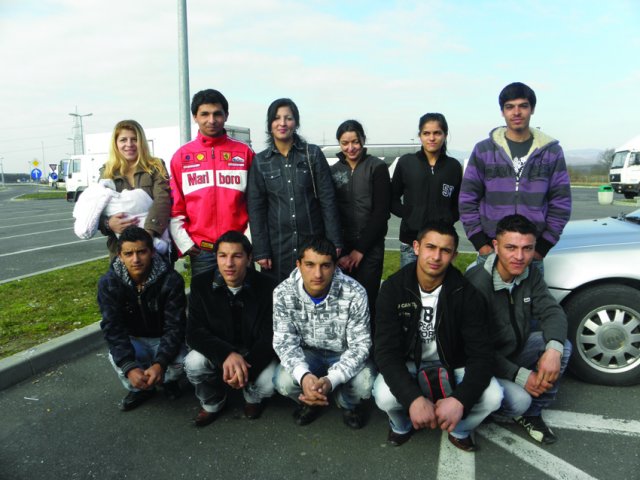
What of the 18 applicants in D.H.? How, if at all, have their lives changed as a result of the judgment? Each applicant received a small compensation; none of them received an adequate education. During an ERRC visit to Ostrava in March 2010, the ERRC met with most of the applicants, stressing the necessity of continuing the fight to force the government to adopt positive measures vis-à-vis real change in the school situation of Romani children in the Czech Republic. Although the decision came too late to influence the schooling of the 18 applicants, they are in general happy about it. Darina Balazova, the mother of one of the applicants, stated that she was happy because the judgment will hopefully give other Romani children a chance to receive quality education without being discriminated against. Unfortunately, the applicants, most of them with their own children, reported to the ERRC that their children were still attending practical schools, with the same teachers that the parents had. That is why it is important that we strive to realise the wishes of the original applicants who put the issue on the agenda, who brought attention to the issue of discrimination of Romani children in education, but who are too late to benefit from the actual judgment. Furthermore, it is our job to make sure that their struggle was not in vain by putting pressure on governments and by unmasking similar discriminatory practices in other countries in Europe.

Endnotes: 

  1. Lydia Gall is an ERRC Lawyer. Robert Kushen is the ERRC Executive Director.
  2. European Court of Human Rights (ECtHR), D.H. and Others v The Czech Republic, Application no. 57325/00, 13 November 2007, available at: http://cmiskp.echr.coe.int/tkp197/view.asp?action=html&documentId=825443&portal=hbkm&source=externalbydocnumber&table=?F69A27FD8FB86142BF01C1166DEA398649.
  3. Council of Europe, Convention for the Protection of Human Rights and Fundamental Freedoms as amended by Protocols No. 11 and No. 14, Rome, 4.XI.1950, available at: http://conventions.coe.int/treaty/en/Treaties/Html/005.htm.
  4. ECtHR, D.H. and Others v The Czech Republic, paragraph 209.
  5. Ibid., paragraph 209.
  6. Ibid., paragraph 171.
  7. Ibid., paragraph 205.
  8. Law No. 561/2004 Coll., on preschool, primary, middle, higher technical and other education.
  9. Ibid., Section 185 (3): “Remedial special schools under the current legal regulations will be elementary schools hereunder.” However, there is no guidance in the Schools Act or its implementing guidelines describing what this transformation actually means or how any changes should be undertaken.
  10. Kateřina Hrubá, Z§vůle Práva, How the Czech “school reform” in effect influences the Czech elementary education system in relation to the position of Romani children, 2007, 4, available at: http://www.zvuleprava.cz/?page_id=14.
  11. Amnesty International, Injustice Renamed – Discrimination of Roma in Education in the Czech Republic (Amnesty International Publications, 2010), available at: http://www.amnesty.org/en/library/info/EUR71/003/2009/en.
  12. It was repealed on 1 January 2005.
  13. ECtHR, D.H. and Others v The Czech Republic, paragraph 216.
  14. Three NGOs reports, published in August 2008, May 2009 and November 2009, were submitted; available at: http://www.errc.org/cikk.php?cikk=3559.
  15. Rámcový vzdělávací program pro základní vzdělávání – příloha upravující vzdělávání žáků s lehkým mentálním postižením, available as part of downloadable package at: http://www.msmt.cz/vzdelavani/ramcovy-vzdelavaci-program-pro-zakladni-vzdelavani-verze-2007.
  16. Conference material and report available at: ERRC, “D.H. and Others Tabled for Discussion One Year On”, press release, 30 October 2008, available at: http://www.errc.org/cikk.php?cikk=2986.
  17. ERRC, “D.H. and Others Tabled for Discussion One Year On.”
  18. GAC Consulting, Educational careers and educational opportunities of Romani pupils at primary schools in the neighborhoods of excluded Romani localities (January 2009), available at: http://spolecnedoskoly.cz/wp-content/uploads/analyza-spolecnosti-gac-pro-msmt.pdf.
  19. People in Need, Analysis of individual approach of pedagogues to pupils with special educational needs (February 2009), available at: http://spolecnedoskoly.cz/wp-content/uploads/analyza-organizace-clovek-v-tisni-pro-msmt.pdf.
  20. Czech School Inspection, Thematic Report – Compendium of results from the thematic control activity in practical elementary schools, (March 2010), translation by OSF Prague, available at: http://www.osf.cz/en/programove-oblasti/lidska-prava/roma/news.
  21. Czech School Inspection, Thematic Report – Compendium of results from the thematic control activity in practical elementary schools.
  22. The NAPIV is on file with the ERRC.
  23. ERRC, “Czech Minister’s letter on ending segregation of Romani children in practical schools welcomed by international organisations”, press release, 2 February 2010, available at: http://www.errc.org/cikk.php?cikk=3061.
  24. “Official: Most Roma placed in “special” schools rightfully”, Prague Daily Monitor, 25 February 2010, on file with the ERRC.
  25. Draft Government Action Plan on Inclusive Education, sections 72 and 73. On file with ERRC.
  26. Czech School Inspection, Thematic Report – Compendium of results from the thematic control activity in practical elementary schools.
  27. ERRC/OSJI, Committee of Ministers of the Council of Europe – D.H. and Others v The Czech Republic. Third Submission by the European Roma Rights Centre and the Open Society Justice Initiative (13 November 2009), available at: http://www.errc.org/cikk.php?cikk=3559, paragraph 16.
  28. ERRC/OSJI, Ibid., paragraph 3.
  29. ERRC/OSJI, D.H. and Others v Czech Republic – Memorandum Concerning the State and Implementation of General Measures to the Committee of Ministers of the Council of Europe from The European Roma Rights Centre and the Open Society Justice Initiative (May 2009), available at: http://www.errc.org/cikk.php?cikk=3559, paragraph 18.
  30. Prague City Court, 10 April 2009.
  31. Amnesty International, Injustice Renamed – Discrimination of Roma in Education in the Czech Republic (London: Amnesty International Publications, 2010).


Horizontal Rule


Horizontal Rule