
Network
About the Roma Rights Network
The Roma Rights Network operates as a decentralised coalition of Roma-led organisations and human rights dedicated groups and individuals working to advance Roma rights across Europe. Founded on International Roma Day, 8 April 2022 in Budapest, the Network brings together NGOs, grassroots organisations, activists, human rights lawyers, and legal advocacy groups united by a shared commitment to promoting a human rights-based approach to Romani activism.
The Network represents an ever-growing community of organisations and activists who believe that the universality of human rights should be the starting point for Roma rights activism, and that systemic discrimination and antigypsyism must be challenged through legal advocacy, strategic litigation, documentation, and collective activist action
What We Do
The Roma Rights Network serves multiple functions for its members:
A Space for Connection and Collaboration
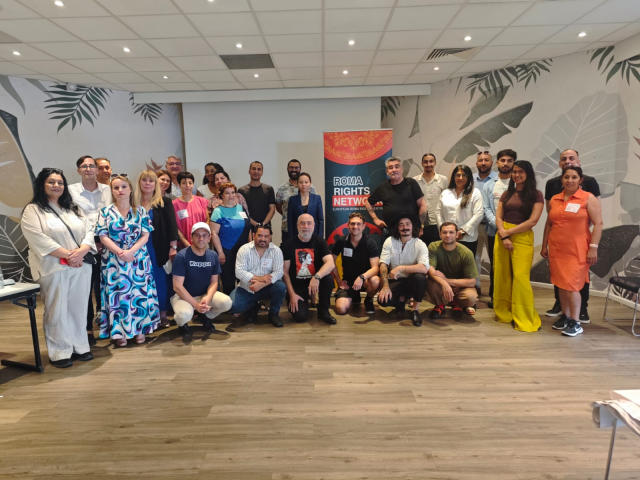
The Network provides a vital meeting space where members can connect, share experiences, exchange strategies, and build solidarity. Through regular online and in-person meetings, members stay connected to a broader movement working toward the same goals.
Collaborative Projects and Opportunities
Members have the opportunity to participate in joint projects with the ERRC and other Network organisations. These collaborations amplify impact, pool resources and expertise, and create opportunities for collective action on strategic cases and campaigns.
Knowledge Sharing and Movement Building
The Network facilitates the exchange of information, best practices, and legal strategies amongst members. This includes sharing updates on important cases, policy developments, and emerging threats to Roma rights across different countries and contexts.
Mutual Support and Solidarity
Members support one another in their work, whether through sharing resources, providing expertise, or standing in solidarity when organisations or activists face threats or challenges.
Amplifying Voices
The Network helps amplify the voices of Roma-led organisations and grassroots activists, ensuring that those most affected by discrimination are at the forefront of advocacy and that rights abuses are exposed and documented.
How the Network Operates
Communication and coordination within the Network happens primarily through:
- A dedicated bi-annual publication, 'The Roma Rights Review', which documents the state of human rights for Romani people across Europe based on the monitoring and expertise of the Network.
- Online meetings to discuss ongoing work and coordinate collective responses between network members
- In-person gatherings when possible (usually once per year) to deepen relationships and strategize together with the entire network.
- Collaborative project opportunities to access funding with the ERRC and other member organisations
The Network maintains a decentralised structure, respecting the autonomy of each member organisation while fostering collaboration and mutual support.
Membership Criteria
The Roma Rights Network welcomes new members who share our commitment to human rights-based Romani activism. We are always willing to grow and evolve as a movement.
Eligible members include:
- Roma-led organisations* and grassroots groups.
- NGOs focused on human rights and combating discrimination against Romani people.
- Legal advocacy organisations and law firms engaged in Roma rights litigation.
- Individual human rights defenders, lawyers, and activists working on Roma rights issues.
To join the Network, applicants should demonstrate:
- Commitment to human rights principles: A clear dedication to advancing Roma rights through a human rights framework, including combating antigypsyism, discrimination, and systemic racism.
- Active engagement in Roma rights work: Demonstrated involvement in legal advocacy, community organising, strategic litigation, documentation of rights violations, policy work, or related activities.
- Alignment with Network values: A commitment to solidarity, collaboration, and centring the voices and active participation of Romani communities in activism.
- Willingness to participate: Readiness to engage with other Network members, contribute to collective efforts, and participate in meetings and communications.
We particularly encourage applications from Roma-led organisations, grassroots groups, and activists working at the frontlines of defending Roma rights.
How to Join
If your organisation, or you as an individual activist, would like to apply to join the Roma Rights Network, please contact us at network@errc.org.
In your expression of interest, please include:
- Your name and organisation (if applicable)
- A brief description of your work on Roma rights
- How you hope to contribute to and benefit from the Network
The Network remains open to new members, and we look forward to welcoming more organisations and activists into this growing anti-racist movement.
* For brevity we say Roma, but we also mean other ethnic identities that are commonly collectively referred to as ‘Roma and Travellers’ by the Council of Europe (despite encompassing multiple ethnic groups), including groups such as: Roma, Sinti, Manouche, Calé, Kale, Romanichal, Romany Gypsy, Gitanos, Bayash, Rudari, Traveller, Yenish, Gens du voyage, Balkan Egyptian, Ashkali, Abdal, Dom, and Lom people.