
Ambulance Workers Convicted of Fatal Violence against Romani Patient in Hungary
05 November 2026
By Judit Ignácz
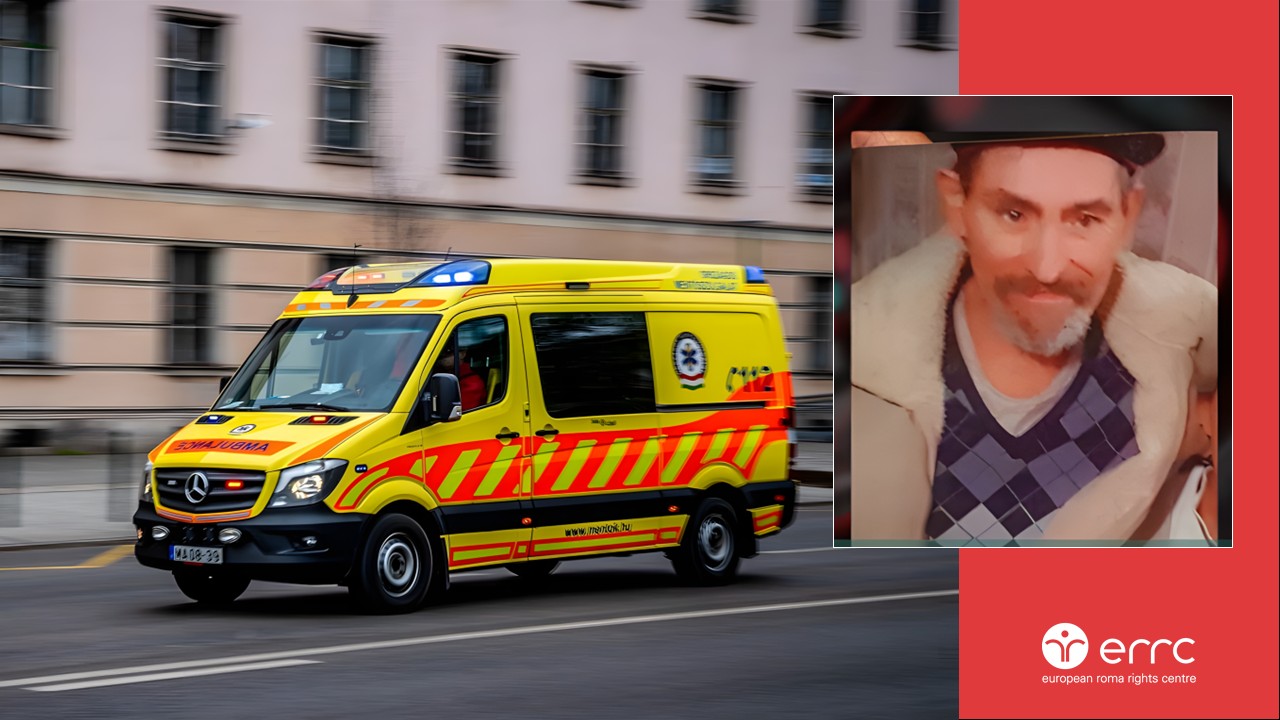
An ambulance should be a place of safety, protection, and medical care for anyone whose life or health is at risk. In 2022, this was far from the experience of 52-year-old Romani man, István Lakatos from Lajosmizse, Hungary. On the night of 4th April 2022, an ambulance was called to assist István who was experiencing serious breathing difficulties. Instead of rendering professional medical care, two ambulance workers chose to subject him to racist verbal abuse and deliberate physical violence while transporting him to the nearest hospital. István died later in hospital.
Now, four years later, on 30th October 2026, the Kecskemét Regional Court’s final judgment found both men from the ambulance guilty of offenses including violence against a member of an ethnic community, assault while performing a public duty, and bodily harm. The ambulance driver received an 18-month prison sentence and a three-year ban from working in emergency rescue and patient transport. His colleague, the ambulance attendant, was initially sentenced to 1 year in prison, a 2-year disqualification from patient care and transport, and a 1-year ban on exercising public rights. On appeal, the court reduced the sentence to 4 years' probation and waived the ban on exercising public rights. The court found no proven causal connection between the assault and István’s death. His family continues to question this conclusion and considers the sentences far too lenient.
Racist Abuse and Deliberate Violence
The ambulance's audio recording became crucial evidence in the criminal proceedings. It captured the workers making racist remarks about István's ethnic background, repeatedly mocking the pronunciation of his surname and using obscene language to insult and humiliate him. Their conversation also revealed that they had agreed to teach him a lesson, as they perceived him to be drunk.
According to the court's findings, the two men acted together with the intention of deliberately causing him physical injuries. The ambulance attendant chose not to secure István properly with the required safety belt. Instead of staying beside him to monitor his condition as required, he moved to the driver's cabin and sat next to the driver. The driver repeatedly made sudden left-to-right steering movements and applied sudden, forceful braking. As a result, István's head struck an interior storage shelf inside the ambulance. When István's condition deteriorated, the two ambulance workers called for additional emergency medical assistance, but István later died in hospital.
István suffered injuries in the ambulance that, according to the medical assessment, would heal within eight days. The court found no proven causal connection between the assault and István’s death. However, medical evidence regarding the circumstances and causes of his death has not been communicated or made publicly available.
According to media reports from 2022, the ambulance workers lied to police, saying they had to suddenly brake because an animal had crossed the road. During the court proceedings, both men apologised, but it did not bring comfort to the family. “An apology means nothing to me,” István Lakatos's sister told RTL News after a Hungarian court gave its final judgment. She also said the punishment did not reflect the seriousness of what had happened to her brother.
Anti-Roma Racism in Healthcare
The abuse of István Lakatos is not an individual case of misconduct. It is a part of a broader, longstanding pattern of discrimination against Roma in healthcare systems. As far back as 2006, the European Roma Rights Centre (ERRC) published its report Ambulance Not on the Way: The Disgrace of Health Care for Roma in Europe that highlighted verbal abuse, degrading treatment, inferior medical services, and barriers to accessing emergency care across several European countries, including Hungary. In Hungary, another case as recently as 2020 involved a Romani man who died in Csenyéte after ambulance workers waited outside the village for a police escort instead of providing immediate medical assistance.
István’s case shows why discrimination in healthcare remains an urgent concern. A Romani patient was not only denied equal treatment but was deliberately targeted because of his ethnic identity by the very professionals who were trusted to provide medical assistance, safety, and care for him.
When Those Trusted with Protection Become the Perpetrators
The perpetrators were emergency medical professionals exercising public responsibilities. István was entirely dependent on their assistance and had no other chance to protect himself or seek alternative care during the transport.
Under international human rights standards, everyone has the right to receive medical treatment with dignity and without discrimination. Healthcare professionals have a fundamental duty to provide equal treatment regardless of a patient's ethnicity, social background, or economic circumstances. Patients trust them to act professionally and in their best interests. This responsibility is especially important for emergency medical workers, who meet people at their most vulnerable.
The conviction of the two ambulance workers is a step towards accountability. However, punishing the individuals involved is not enough. The fact that these incidents still happen raises serious questions about the effectiveness of discrimination prevention measures against Roma in healthcare institutions.
How can Romani patients be protected from discrimination and violence within emergency medical services? How do authorities investigate complaints about discriminatory treatment? What is being done to ensure that such behaviour is recognized, challenged, and prevented before another Romani patient becomes a victim and dies?
Internal investigations are not enough, not transparent, and not objective. Hungary urgently needs an independent investigation by external experts into discriminatory practices within its emergency medical services and the wider public healthcare system. This should examine the accessibility and effectiveness of the complaints and reporting system, the investigation of discriminatory treatment in place, and whether current rules and protections are strong enough to prevent similar incidents from happening again.
István Lakatos' family's demand for justice should be viewed as a public issue, not an individual, private grievance. No one should have to fear the people who arrive to save their life. Romani patients are entitled to the same dignity, protection, and quality of medical care as everyone else. Equal treatment in healthcare is not a favour granted by medical professionals. It is a fundamental right. The Hungarian authorities must ensure that this right is respected in practice, not only on paper.