
Disaster Nationalism in Action: Simeonov, Bulgaria, and the Mainstreaming of Hate Speech
31 August 2026
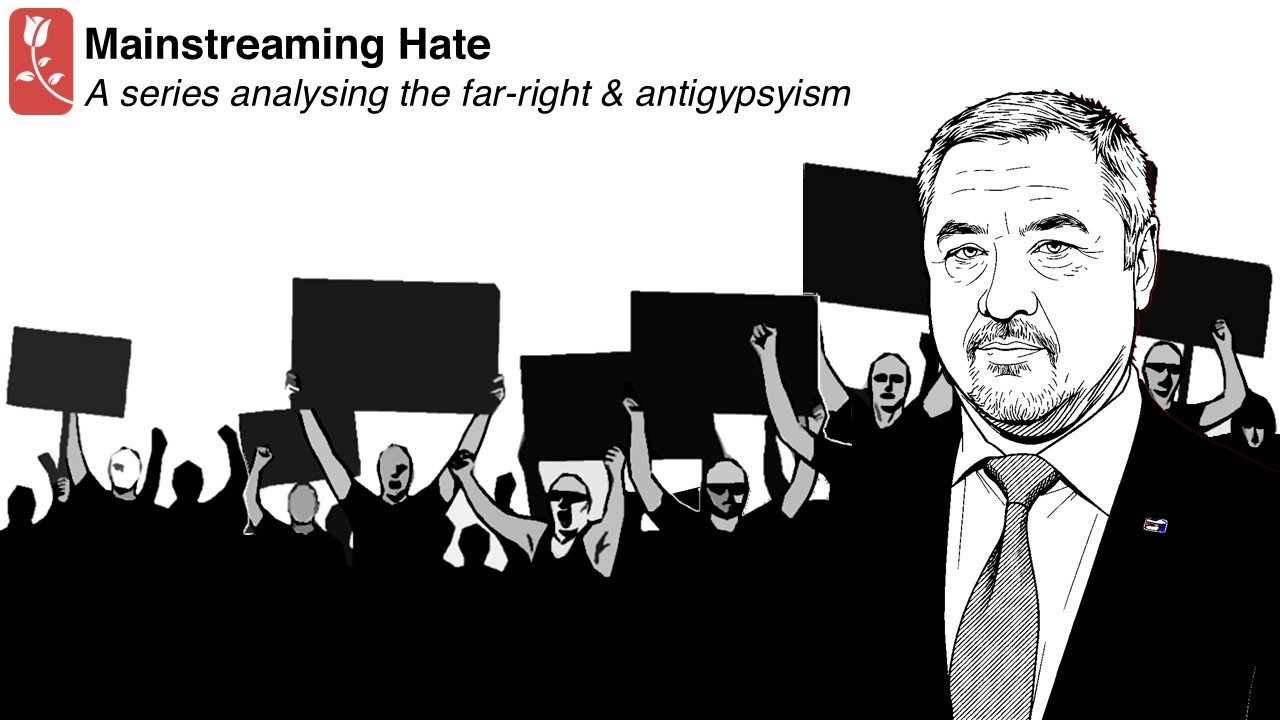
It is not difficult to see how the energies and resentments that feed the far-right, combined with what Richard Seymour described as "the chance to humiliate others," have animated anti-Roma racism. In two recent and related rulings in May 2026, the European Court of Human Rights (ECtHR) found that far-right extremist politician Valeri Simeonov deliberately used dehumanising and inflammatory language to "portray Roma in Bulgaria as prone to crime and depravity," with the overall thrust of his message being that "they are immoral social parasites who abuse their rights, live off the Bulgarian majority, and subject that majority to systematic violence and crime without hindrance."
Simeonov is the textbook exponent of Disaster Nationalism. In addition to racially disparaging Roma as "brazen, arrogant and brutalised humanoids", he presented them as a threat to the security and viability of the nation. He deemed the Roma to be integral to a sinister political experiment he likened to Bolshevism, which promised political representation and minority privileges, “without any obligations.” At the heart of this elite conspiracy, 'the root of evil' was the Bulgarian Parliament:
"Herein lie the fear, pain and tears of our parents and children, the humiliation, grief and feeling of powerlessness of the Bulgarian doctors, policemen, social workers and teachers … There is no chance, no chance if we do not rely on patriotism, unity and the rage to survive!"
As for the mainstreaming of far-right extremism, Simeonov's political fortunes in the intervening years are instructive. In 2017, he led the Patriotic Front, and became deputy prime minister in a coalition government led by Prime Minister Borisov's GERB party (Citizens for European Development of Bulgaria). Borisov appointed Simeonov – who had earlier mused about creating "modern concentration camps" – to head Bulgaria's National Council on Co-operation on Ethnic and Integration Issues. The appointment of this "pronounced supporter of fascist and neo-Nazi ideology" to such a position; a leader who claimed that "Bulgaria is facing the abyss of an ethnic crisis – two opposing mutually exclusive worlds are facing each other in our tormented homeland" provoked outrage in Bulgaria; and warnings from the liberal opposition to the ruling GERB party that its "toxic national-populism" can only divide society and heighten the "risk of stirring up ethnic enmity." As long as GERB remained in power, the EPP and the European Commission had nothing to say about the Bulgarian ruling party's collusion with far-right extremists.
The blurring of lines between the radicals and extremists, and the impact of politically-orchestrated anti-Roma hate speech by Bulgaria's far-right mobsters in parliament, which ECRI reported became especially pronounced in the run-up to local or national elections, led to an increase in hate crime.
This prompted the observation from the Council of Europe's Human Rights Commissioner "that most racist attacks in the country are committed against Roma and that hostility against them has increased in recent years, as indicated by anti-Roma attacks which took place in several localities across Bulgaria, forcing hundreds of Roma to leave their homes and rendering many of them homeless or destitute."
The pattern is not confined to Bulgaria. Similarly in Italy, in its 2024 report ECRI noted with "serious concern that Italian public discourse has become increasingly xenophobic in recent years, and political speech has taken on highly divisive and antagonistic overtones."
The Committee noted that the targeting of visible minorities including Roma by politicians and public officials, especially during election periods, has led to a form of 'trivialisation' of hateful remarks in public life. The landslide victory for the radical right led by Meloni and her Fratelli, in Italy's 2022 national elections marked the culmination of longer-term socio-political processes, which, according to Emanuele Toscano, led to a progressive radicalisation of the mainstream, and legitimised hitherto "taboo ideas of an extremist matrix … so much so that today, the Italian mainstream right has become so radicalised that it is extremely difficult even to define what 'radical right' means."
These two national contexts in Bulgaria and Italy illustrate how the machinery of disaster nationalism operates in practice. A far-right politician dehumanises Roma in parliament, is rewarded with a deputy premiership and put in charge of ethnic integration policy, and it takes twelve years for a court to rule that his words violated the European Convention. Meanwhile, the hate speech he normalised contributed directly to attacks that forced hundreds of Roma from their homes. In Italy, the radicalisation of the mainstream has progressed so far that the boundaries between 'radical' and 'extreme' have all but dissolved. The consequences for Roma can be measured in burned homes, violent assaults, displaced families, and the shrinking space for Roma to exist safely in their own countries.
This article is part of the ‘Mainstreaming Hate’ series, adapted exclusively from "The State of Hate: Antigypsyism & the Far-Right in Europe," a section of the Roma Rights Review: Summer 2026, published by the Roma Rights Network and the European Roma Rights Centre (ERRC). It is the second of a five-part series drawing on the Review's documentation of anti-Roma racism by state and non-state actors across Europe. The full Roma Rights Review is available here.
The first article was: The Normalisation of Neo-Fascism: Anti-Roma Racism at the Heart of Europe's Far-Right Surge.
Next in the series is: "The Crumbling Cordon Sanitaire: Centre-Right Complicity and the EU Budget Threat to Roma Rights."