
How Germany Encoded Anti-Roma Exclusion into its Welfare Law
19 August 2026
By Joachim Krauß
Early June 2026, in the Ückendorf district of Gelsenkirchen: local far-right Alternative für Deutschland (AfD) politicians arrive at houses occupied by Roma from Bulgaria and Romania, carrying brooms and dustpans, demanding that residents clean the street in front of rolling cameras.
The outrage was immense, and justified, but must not distract from where actual political responsibility lies for a climate that enables such actions. One key figure is Sören Link, SPD Mayor of Duisburg, who in October 2025 told Spiegel that people from Romania and Bulgaria had entered the country under the "pretext of the free movement of workers" and had "never contributed to the social security system". In June 2026, a delegation of Ruhr-region mayors travelled to Berlin to meet Federal Labour Minister Bärbel Bas and the parliamentary group leaders of the governing Christian Democratic Union (CDU) and Social Democratic Party of Germany (SPD). The outcome – an "action plan to combat the abuse of freedom of movement and social benefits" – is to be adopted by the Federal Cabinet before the summer recess.
Two decades of exclusion: from overt racialization to structural targeting
For over twenty years, Germany has been a main destination country for Roma from Bulgaria and Romania. During this time, a dynamic of exclusion has developed that is barely acknowledged in the European Roma-rights debate.
When the EU expanded eastward in 2004, Germany delayed free movement of workers for seven years. Roma from Hungary and Slovakia were openly racialised and portrayed as a social threat. After Bulgaria and Romania joined the EU in 2007, this pattern intensified. Between 2011 and 2014, Roma became the embodiment of "poverty migration" in German political discourse.
After 2014, explicit references to Roma largely disappeared – not as a sign of moderation, but as a shift in form. Overt racialisation was replaced by formally neutral categories with structurally selective effects: housing situation, employment status, receipt of social benefits. None of these explicitly refers to Romani ethnicity, but their combined effect disproportionately impacts Roma from Romania and Bulgaria.
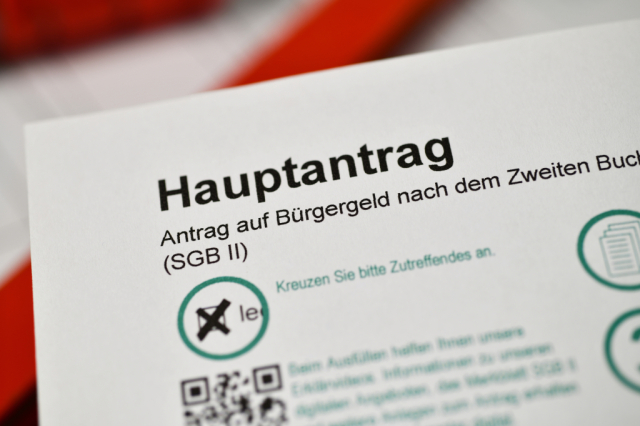
In 2016, this exclusion was enshrined in law: Section 7(1) SGB II barred EU citizens without recognised worker status from basic social security; a direct legislative reflection of the preceding debate, enabled by ECJ rulings in Dano (2014) and Alimanovic (2015), which recognised Member States' discretion in this area. Two years later, child benefit was tied to children's country of residence in a practice the European Court of Justice later classified as discriminatory.
Neutral categories, selective outcomes
The most striking example comes from Duisburg. Since 2012, the city has operated a "Problem Properties Task Force," working since 2016 under fire-safety legislation to carry out unannounced inspections without proportionality assessment or preventive social work. By February 2026, 217 buildings had been inspected; 115 were issued with occupation bans, and only 23 were reoccupied. These buildings had housed well over 3,000 people. Fire-safety law permits access without a court order, and the term "derelict properties" has become synonymous in political discourse with the presence of Romanian and Bulgarian nationals.
Another key instrument is an internal 2018 directive from the Federal Employment Agency, which frames EU migrants' receipt of benefits as a gateway to "organised benefit fraud" and establishes systematic screening of low-income EU nationals that has never been subject to parliamentary scrutiny.
Employed, poor, and criminalised
The data tell a different story from the political rhetoric. Romanian and Bulgarian nationals have an employment rate of 69%, well above the 57.8% average for all foreign nationals and close to the German average. Their social welfare (Bürgergeld) receipt rate stands at 14.1%, below the foreign-national average of 19.5%. That 182,000 people rely on supplementary benefits despite being in work is not evidence of fraud; it points to structural exploitation in the low-wage sector.
In North Rhine-Westphalia, Romanian and Bulgarian nationals accounted for just 5.6% of those suspected of fraud in 2024; two-thirds were German nationals. Nationwide, 7,633 cases of low-income EU nationals receiving supplementary benefits were documented in a parliamentary inquiry; roughly 1% of the more than 700,000 people from these countries in regular employment.
The spiral accelerates
What authorities have practised internally for years is now being enshrined in federal law. In June 2025, Labour Minister Bärbel Bas (SPD) set the political tone, speaking in a Stern interview of "mafia-like structures in basic income fraud" and referencing her roots in Duisburg. This was no slip of the tongue. As Federal Labour Minister and a senior SPD figure, Bas embodies the political mainstream, and it is within that mainstream (not the far-right) that this narrative has been developed over twenty years.
The Conference of Interior Ministers (IMK) provides the crucial institutional link, combining control over residence rights with exclusion from social welfare. In June 2024, it called for tightened criteria and a revision of the administrative regulation on freedom of movement, despite the Interior Ministry noting the existing legal basis was sufficient. In December 2025, it went further: benefits authorities are to systematically notify immigration authorities when EU nationals apply for social benefits, and data exchange between job centres and immigration authorities is to be institutionalised.
In November 2025, the Conference of Social Affairs Ministers (ASMK) called for yet stricter eligibility criteria and bilateral "readmission agreements": a migration-policy instrument targeting people exercising their right to free movement. In January 2026, the Bundesrat (the Federal Council and upper house for Germany’s 16 federal states) adopted a ten-point programme demanding a twelve-month prior insurance period as a prerequisite for social welfare payments (Bürgergeld). This is in direct contradiction to European Court of Justice case law, under which any genuine and actual employment establishes worker status. Simultaneously, the state welfare commission (Sozialstaatskommission) recommended restricting employee status to "near-full-time employment."
In April 2026, decrees from the Stuttgart Job Centre and the Ministry of Social Affairs in North Rhine-Westphalia made it more difficult for EU nationals to access benefits. In June 2026, the announced action plan continued this escalation. Thomas Kufen, the CDU mayor of Essen, claimed he had encountered "plundering of social security funds by criminals" on a scale he had "only ever seen in Germany."
The spiral continues
From explicit racialisation in 2004, through the constructed category of "poverty migration," to legally enshrined administrative practice and now federal legislation, each stage became possible because the previous one was already regarded as normal. The system now operates without explicit ethnic labelling, making it difficult to challenge under anti-discrimination law.
Germany is not alone in Europe in excluding Roma. What sets it apart is the institutional depth and twenty-year continuity of this exclusion, and the fact that it is currently being codified into federal law with little attention being paid to it. What is normalised at this level sets precedents for other countries. Germany is now a case that can no longer be ignored in the European debate on Roma rights.
Joachim Krauß is a specialist advisor on migration and deputy managing director of the Federal Working Group for Assistance to the Homeless (BAG W). His expertise includes EU freedom of movement law and structural discrimination in social services administration.