
Italy: While Salvini hates on the Roma yet again, Pavia municipality moves on plans to build a new segregated camp
19 March 2026
On the evening of the 12 March on national TV, in yet another racist broadside against Roma, Deputy Prime Minister of Italy, Matteo Salvini, declared: "There are thousands of children living in Roma camps in the shit, among the rats, with parents who steal, and they don't go to school, and they don't have a bathroom, they don't have electricity, gas... I've seen them. I've seen them in Milan, I've seen them in Rome, I spoke to them in Giugliano …”
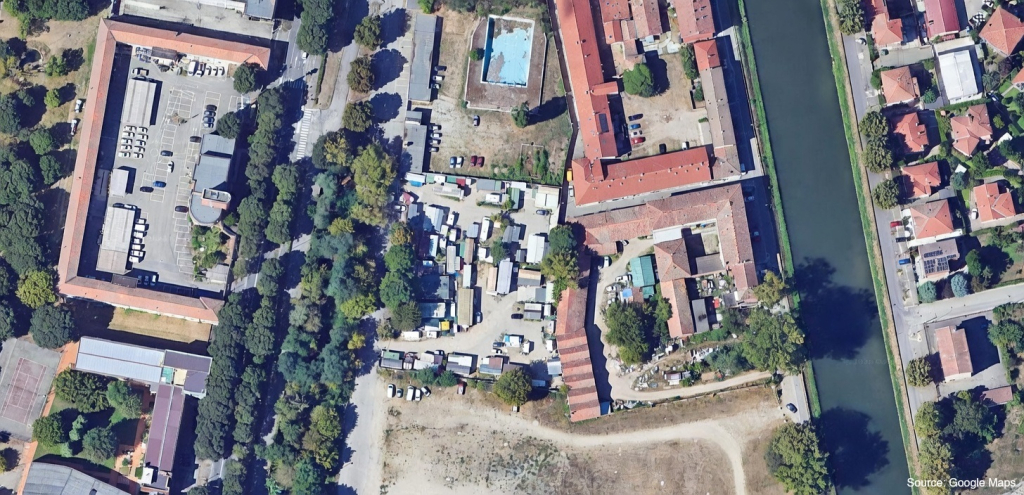
Three days later, the municipal authorities in the town of Pavia, took its first steps towards the construction of a new ethnically segregated camp in the industrial zone of Pavia Est. This is intended to accommodate 38 people comprising 13 Sinti families, whose relocation from Piazzale Europa (where they have lived since 1984) is deemed necessary for the realization of a Waterfront project, which according to the municipal authorities “will bring to Pavia over 17 million euros of investments for urban regeneration and, among other interventions, also the renovation of the municipal outdoor swimming pool.”
The local neighbourhood committee, which has protested the lack of any consultation with residents, stated "For eight years in Italy a new nomadic camp has not been built. In Pavia, 590 thousand euros are spent that could have been invested in decent housing. In Pavia East we have no buses, the first playground is one and a half kilometres away, beyond a level crossing. The children will play between trucks and dust, there are no shops, entertainment or bike paths". Carlo Stasolla, president of Associazione 21 Luglio, called on the Municipality to desist, and stated: “We reiterate our willingness to meet the council to identify reasonable alternatives. Otherwise, we will take legal action.”
Camp-Life: Routine evictions, segregation and ‘alarming’ living conditions
The intent by the Pavia municipal authorities to build a new “nomad camp” comes more than 12 years after Italy approved the National Strategy for Inclusion of Roma, Sinti and Caminanti in 2012, pledging “to overcome the system of the camps”.
It also comes just one year after the European Commission, prompted by the ERRC and the local Stop Ghettos Committee, instructed the Region of Calabria to ‘modify’ its project plans to evict Romani residents from a segregated camp and rehouse them in new and improved segregated social housing units. The activists’ intervention sought to prevent EU funding being used to further the segregation of Roma, and to ensure that the project provides for the relocation of affected families into integrated social housing.
In July 2025, the European Committee of Social Rights' (ECSR) upheld a collective complaint brought by ERRC against Italy, and instructed the Italian Government to protect Romani families facing homelessness and severe health risk in Giugliano in Campania (Naples). The Committee found that the situation posed a risk of serious and irreparable harm to the health and dignity of the Roma; and instructed the government to provide immediate safe and adequate temporary accommodation, with access to essential services such as water, sanitation, heating, waste disposal, and electricity to the 120 families.
The attempts to create new, segregated ‘Nomad Camps’ signals a worrying regressive step, and is diametrically opposed to the EU Roma strategic framework and the 2023 European Council conclusions, which call for EU funds to be used for the “eradication of housing segregation that stems from discrimination.”
Salvini’s Lega and its “toxic, vulgar, mendacious, and discriminatory narrative”
Salvini’s latest salvo against the Roma is far from an isolated rant, as the ERRC’s recent report on forced evictions and hate speech in Italy clearly demonstrates. The extent to which anti-Roma racism had become normalised in Italy has long been evident not just in the persistence of mass evictions and demolitions of Roma camps, but in the dehumanising language that accompanied threats of expulsion and banishment targeting Roma. And it is Salvini’s Lega that most often takes the lead when it comes to inciteful speech.
In November 2025, the associations 21 Luglio, Lunaria, and ASGI, filed a complaint of racial harassment with the Rome Court against Emanuele Licopodio, a Lega councillor in Rome’s Municipio VI who posted videos on social media describing Romani people as “parasites of our society”, claiming that Roma engage in illegality on a daily basis, and that those who “refuse to integrate should have their children taken away immediately."
The associations maintained that such comments profoundly undermine human dignity, and fuel fear and hostility towards Roma in Italy. Carlo Stasolla, president of 21 Luglio, asserted that “we must continue to stem the flow of a toxic, vulgar, mendacious, and discriminatory narrative that periodically, like the tip of an iceberg, surfaces without warning on the surface of the collective imagination.”
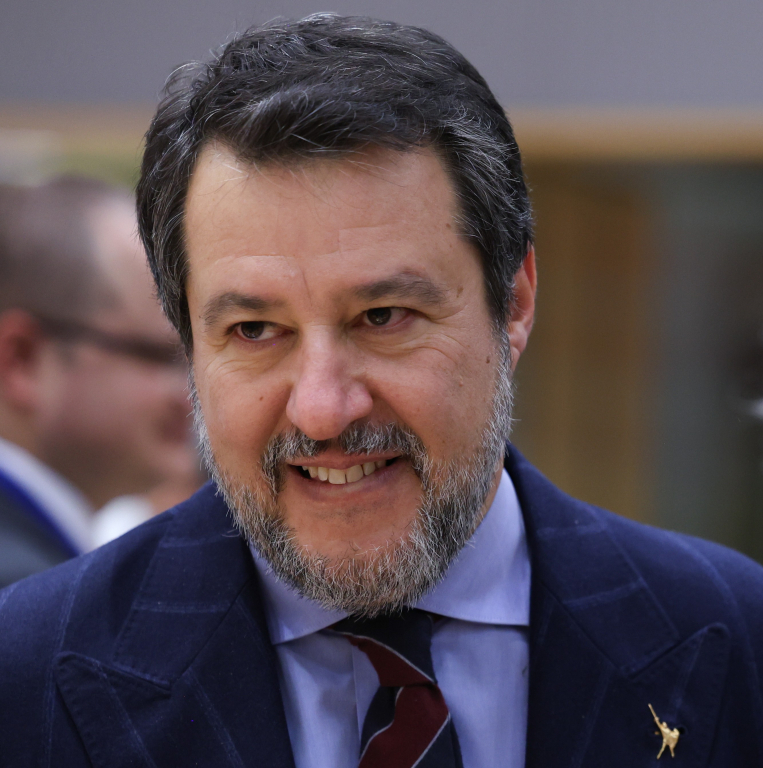
Salvini has long courted notoriety – in the past he has praised aspects of Mussolini’s rule, called for Roma camps to be razed, for Roma to be ‘cleansed’ from Italy ‘piazza by piazza’, and even proposed that seats and carriages on public transport in Milan to be segregated for the Milanese. Back in 2018, the Guardian reported on a dangerous acceleration in attacks on immigrants and minorities after 12 shootings, two murders and 33 physical assaults were recorded in the two months following Salvini becoming interior minister. He contemptuously dismissed “the wave of racism as simply an invention of the left” and in response to rising criticism tweeted “many enemies, much honour” – a reference to a quote from Benito Mussolini on what was also the anniversary of the fascist dictator’s birth.
In its 2024 ECRI report on Italy, ECRI noted with “serious concern that Italian public discourse has become increasingly xenophobic in recent years, and political speech has taken on highly divisive and antagonistic overtones.” The Committee noted that the targeting of visible minorities including Roma by politicians and public officials, especially during election periods, has led to a form of ‘trivialisation’ of hateful remarks in public life. The landslide victory for the radical right, led by Meloni and her Fratelli, in Italy’s 2022 national elections marked the culmination of longer-term socio-political processes, which, according to Emanuele Toscano, led to a progressive radicalisation of the mainstream, and legitimised hitherto “taboo ideas of an extremist matrix … so much so that today, the Italian mainstream right has become so radicalised that it is extremely difficult even to define what ‘radical right’ means.”
Bluntly, this is about the normalisation of neo-fascism. Fascism creeps in, presaging a steady erosion of civility, the shrinking of common ground, punctuated by the constant search for scapegoats and enemies. The lived experience of Europeans past and present, is that this creep can quickly accelerate into a full-blown authoritarian surge.
In times when much that is liberal and democratic threatens to come undone, anti-Roma racism plays a key role in creating the ‘ideological glue’ that binds the irate petit-bourgeoisie and the neo-fascist paramilitaries to form a toxic, reactionary ‘common sense’ (senso comune). The urgent task of progressive politics is to prevent this toxin taking root, and supplant it with what Gramsci called good sense. Combating anti-Roma racism is part of a much wider battle to defeat an insurgent neo-fascism; it is a time for solidarity, not silos. This era must come to be defined by broad-based struggles against barbarism, and in this: Siamo tutti antifascisti!