
Masked Attackers Storm Romani Apartment Building in Belgrade as Police Fail to Intervene
22 January 2026
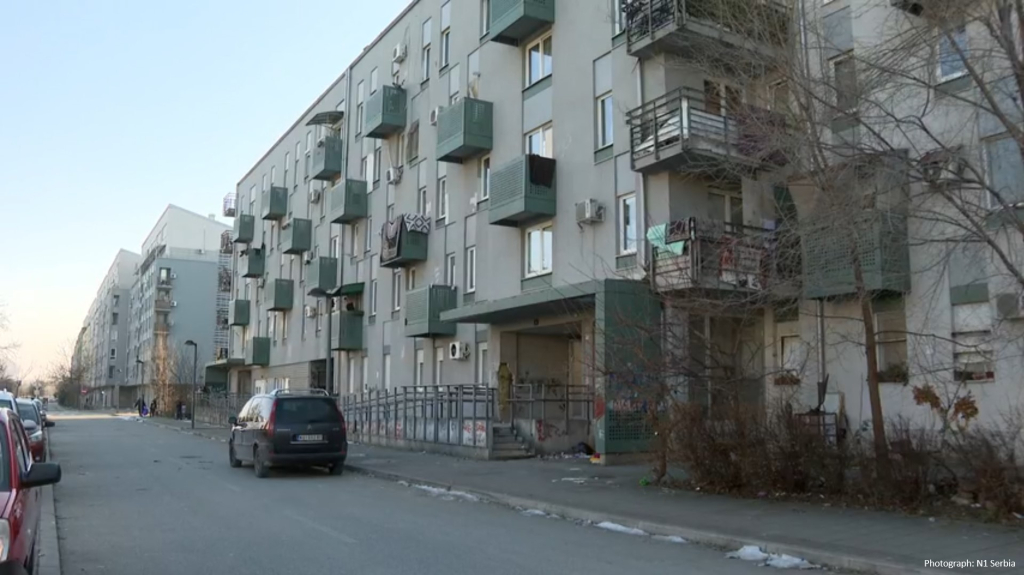
In the early hours of 16th January 2026, around 20–30 masked men armed with bats, sledgehammers, and metal rods stormed a residential building in New Belgrade where primarily Romani families live. The attackers vandalized security cameras, battered apartment doors, and threatened residents including families with young children. Eyewitnesses and local residents told multiple Serbian media outlets that the assailants attacked without any intervention from law enforcement, even as terrified families called to request officers attend the scene.
According to local residents who spoke to N1 Belgrade, the armed group burst into the building at around midnight shouting “police, police!” resulting in terrified residents opened their doors believing a police raid was occurring. Once inside, the unidentified assailants smashed CCTV cameras, broke down doors, and chased residents trying to flee into hallways or to the homes of relatives according to reporting from upravo.rs.
One resident described the scene as being “like in a movie,” saying the men targeted doors at random and came dangerously close to breaking into inhabited apartments. Another resident said the attackers would have “killed us had they gotten inside”. Families with children were forced to leave their homes in the middle of the night for fear of their safety. Another resident said, “I’m not afraid for myself, I’m afraid for my children.”
What Sparked the Attack?
Residents say that the assailants claimed to be looking for a stolen bicycle allegedly taken by one of the people living in the building. One resident added that although the bicycle story was offered by some in the building and even repeated by police, “there is hatred involved too, 100 percent.”
After the initial violence, witnesses said that some of the attackers threatened to return and even suggested that residents should be evicted from the building.
Police Response Under Scrutiny
The alleged lack of response on the part of the police to effectively respond to the incident and the imminent threat to life is of gravest concern but is hardly surprising to human rights activists and residents of the apartment block. Some residents confirmed to N1 journalists that this is not the first such attack, and that there had been no adequate police response to similar incidents in the past.
"Only if someone were to literally kill everyone in the entire neighbourhood would the police come – and even then, only to arrive after everything is over and collect our bodies, that’s it,” said a resident who spoke on condition of anonymity.
According to the Ministry of Internal Affairs (MUP), officers were dispatched, but only after the incident was reported on the night of 16th January. They spoke with residents, inspected the scene, and began an investigation to identify those involved. The MUP has said it took measures within its remit and notified the Third Basic Public Prosecutor's Office in Belgrade.
However, multiple residents say that even when the police did arrive after the attack was over, officers made it clear they would not intervene to stop such attacks or protect people inside. One resident quoted a police officer as saying that the attackers had “the right” to act the way they did: “that there are thousands of hooligans, that they will set your building on fire...”
Another resident said that even when they showed officers video evidence, the response was that police “cannot take anything from here.”
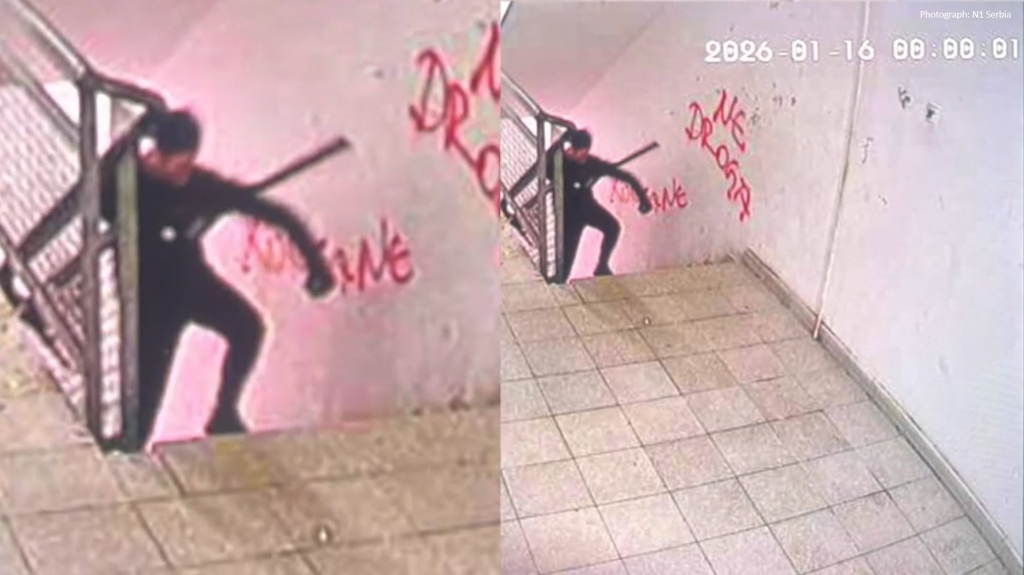
The apparent failure to provide timely, effective protection in the face of a violent hate crime has raised alarm among human rights advocates who see it as part of a broader pattern of institutional neglect toward Romani communities in Serbia.
Andrea Čolak, a human rights lawyer with the ERRC, pointed to police’s failure to consider the racist component of violent crimes as indicative of a wider problem in Serbian law enforcement: “The way the police publicly framed the incident as property damage rather than a direct threat to the safety and lives of the residents fundamentally misinterprets what happened and minimises its gravity. This narrative effectively normalises collective punishment of an entire building for an alleged theft – an attitude that Romani communities are all too familiar with.”
“Claims that the police ‘took measures within their jurisdiction’ serve as a formal cover for institutional passivity. Beyond merely appearing at the scene after the attack and notifying the public prosecutor, the police have a positive obligation to provide effective protection. In this case, there is no indication that any measures were taken that would restore peace or genuinely guarantee the safety of Romani residents” she said.
Čolak highlighted a similar case two years ago in the village of Turekovac, near Leskovac, where a group of masked men entered a Romani neighbourhood and attacked homes and taunted Romani residents to come out from their homes. “Attacks like these are not merely ‘property damage’ as the police and prosecutor often frame them” she told the ERRC. “In Turekovac, we had to go all the way to the Supreme Public Prosecutor and complain in order for them to review the case, which in the end they did, and investigate the criminal offence of ‘instigating ethnic hatred and intolerance’.”
Law enforcement in Serbia: a rotten culture of impunity and neglect
The attack in New Belgrade is not an isolated incident; it reflects longstanding patterns of marginalisation, discrimination, and insufficient protection faced by Roma in Serbia and across Europe. Romani communities historically experience higher rates of poverty, limited access to education and health care, and systemic bias in public services and law enforcement. The United Nations and other international bodies have repeatedly noted that Roma in Serbia face persistent discrimination that limits their ability to enjoy equal rights and protections.
Independent human rights organisations have documented widespread problems with how police and justice systems handle crimes against Roma, including failures to protect communities from hate-motivated violence and inadequate investigation of racially targeted attacks. A 2024 report by the European Roma Rights Centre (ERRC) identified cultures of impunity in Balkan police forces, noting failures to protect Roma and to properly investigate racially motivated hate crimes. In another research into the criminal legal system of Serbia in 2023, the ERRC found that almost half the police officers interviewed did not understand what discrimination is; many believed that it was acceptable to break the law to resolve an issue, and of those police officers canvassed in two surveys, 29% and 41% appeared to believe that Roma “usually steal.”
Serbia’s own government has been repeatedly urged by the European Commission to strengthen its legal and institutional mechanisms against discrimination and to ensure accountability when state actors fail to protect minorities. The Commission has highlighted gaps in Serbia’s enforcement of anti-discrimination frameworks and in collecting reliable data on hate crimes as obstacles to understanding and addressing biases in law enforcement.
Experts from the United Nations Human Rights Committee also noted in 2024 that Roma often lack effective access to justice and remedies after attacks. Even when violence is widely reported, communities frequently find prosecutions delayed or absent, and authorities do not always recognise or address discriminatory motivations in crime investigations as evidenced in ERRC reporting over many years.
Impact on Residents
For the families living in the building, the effects are immediate and personal. Many expressed fears of returning home, worried that masked attackers could come back (as they had threatened to), and that the state would not be able to protect them.
“We just want this to end” said one resident, “to just live like everyone else does in Serbia.”
“The authorities always come to us when they need something from us,” the resident added, “for elections, for rallies — but when we need protection, there is none.”