
Repeat Offender: European Court Orders Bulgaria to Reform After Another Unlawful Demolition of Roma Homes
04 September 2026
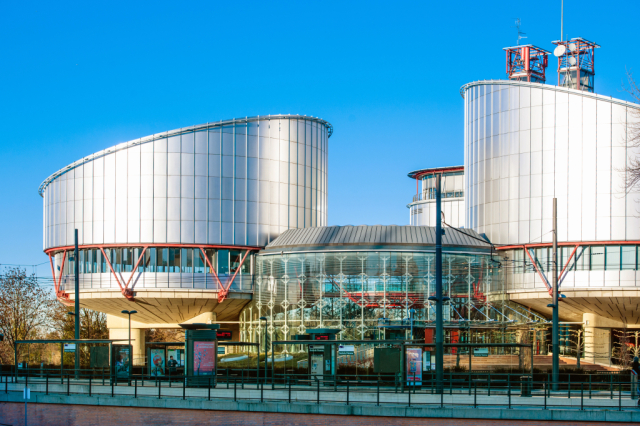
In a landmark victory for the Bulgarian Helsinki Committee (BHC), the European Court of Human Rights (ECtHR) ruled that Bulgaria violated the European Convention on Human Rights, Article 8 (right to private and family life) following the demolition on 9-10 August 2023 of the Romani settlement in Orlandovtsi, a neighbourhood on the north-eastern outskirts of Sofia. The Court also ordered urgent legislative and policy reform to end the callous and systematic demolitions of Roma dwellings by municipal authorities in Bulgaria.
Commenting on the judgement, Adela Katchaounova, BHC Co-Chair stated, “This ruling goes far beyond this specific case; the problem is systemic. Bulgaria must amend the law so that no one can be deprived of their only home without genuine access to the courts. Swift legislative and institutional reforms are necessary to prevent these violations from happening again.”
Members of the Roma community, including members of several of the applicants’ families, had lived at the site since the 1950s. The 60 or so buildings in which the applicants lived stood on four plots owned by the municipality. In June 2023, residents of Orlandovtsi district received eviction notices without any contact information or instructions for legal recourse.
By August, municipal excavators had flattened the neighbourhood. An interim emergency order from the Strasbourg court to halt the demolitions came one day too late. Most of the homes were already reduced to rubble, with families left on the street or crammed into vehicles without running water or sanitation.
The 56 Romani applicants represented by the BHC, were each awarded €10,000 in damages. In a damning verdict, the Court utterly rejected the case made by the state party that its actions were in accordance with the law. The Court found that the authorities deliberately excluded the families from the formal processes in which the demolition orders were made and enforced; provided evasive and misleading information to deliberately conceal their intention to proceed with the demolitions no matter what; and ensured that procedural safeguards counted for nothing “while giving the process a veneer of legality.”
The Advisory Committee on the Framework Convention for the Protection of National Minorities visited the ‘alternative accommodation’ offered to some families whose houses had been demolished and described the inhumane living conditions – old leaking wagons, without insulation, that had been previously filled with garbage – in isolated locations without access to basic services: “As a result of the demolition of their homes in Orlandovtsi, Roma families lost their addresses, leading to the loss of their school district. Subsequently, children who attended schools in the Orlandovtsi district no longer have a possibility to attend them.”
The ‘systemic character’ of such abuses
In its third-party intervention, the ERRC highlighted the systemic nature of such rights abuses, drew attention to the pervasiveness of discrimination against Roma in Bulgaria, the widespread use of racist rhetoric by politicians and in the media, and in particular the frequent resort to forced mass evictions from informal housing. The ERRC argued that it was unrealistic to expect people to pursue domestic remedies in advance of an eviction which took place at short notice or on no notice at all, while a remedy given after the event could not make good the damage resulting from being forced to leave their homes.
The Court concurred that the breach of Article 8 of the Convention – which flowed from the impossibility for the applicants of obtaining a proper review of the proportionality of the intended demolition of the houses in which they lived in the light of their individual circumstances – “appears to be of a systemic character and to be of a kind that has a strong impact on Roma communities in particular.”
It further noted that this is the fourth Article 8 judgment against Bulgaria which concerns the impossibility for the applicants of obtaining a proper proportionality assessment of orders for the demolition of their homes or for their removal from their homes.
The Court found it safe to presume that those authorities were aware that the sudden demolition of the entire settlement would disrupt the applicants’ community life and render them more vulnerable. It also took note of the evidence in applicants’ submission that such mass demolitions were being carried out mostly in respect of houses inhabited by Roma, often in response to anti-Roma protests organised by nationalist parties and groups, while no action was taken against other unlawfully constructed buildings in Bulgaria.
In sum, the Court found a breach of Article 8 of the Convention on the grounds that the applicants were denied any procedure for a proper review of the proportionality of the measure in the light of their individual circumstances, “and in particular of the fact that they were members of a socially disadvantaged group and of a community which had a long history in the settlement.”
The cruelty and brazenness of local authorities in Bulgaria when it comes to demolishing Romani dwellings has gone on for more than two decades. Over the years, while the European Commission has steadfastly remained on mute, such actions have been successfully litigated in the ECtHR, and repeatedly condemned by UN bodies and the Council of Europe. Yet, local authorities have become even more emboldened to ride roughshod over procedural rules, and completely ignore international law.
The most blatant recent example, was the mass demolition in 2025 of family homes in the capital's ‘Zaharna Fabrika’ district of Sofia in blatant defiance of the interim measure imposed four days earlier by the European Court of Human Rights. In what the BHC described as “an unprecedented disregard of this express order and in violation of Bulgarian and international law”, the mayor and the ministry went ahead and demolished all the dwellings in a single day, destroyed the people’s possessions, and left them homeless.
The question remains whether this latest ruling from the ECtHR, with its explicit order for legislative and policy reform to prevent further recurrences of such inhumane and callous practices, will be heeded by national and municipal authorities in Bulgaria, or whether the appetite for collective violence against Roma will continue unabated in this deeply damaged democracy.