
Shamelessly racist: Viktor Orbán on Roma ‘integration’ and putting the Hungarian middle class first
21 January 2026
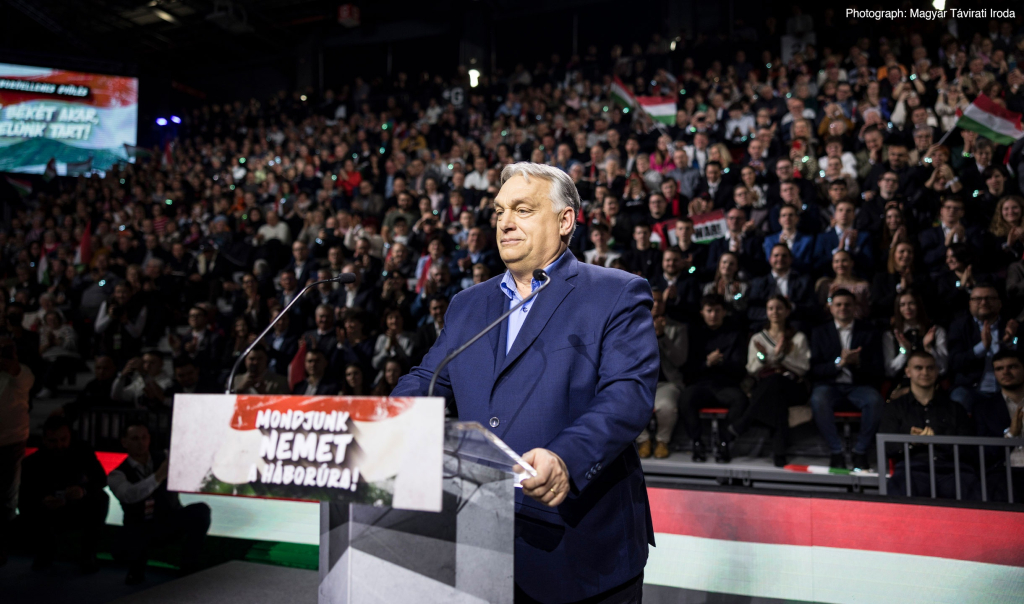
Hungarian Prime Minister, Viktor Orbán openly stated that while 80,000 households do not have running water, to avoid social tension, expanding home-ownership opportunities for the middle class must take priority over the right to clean water and sanitation for Hungary’s poorest and most-excluded Roma:
“There are 80 thousand houses in Hungary where there is no running water, this is at least 320 thousand people, but it may be more. We will deal with this, but first the middle class must be given the opportunity to have their own apartment, because if we start with the lower class, the two classes will turn against each other.”
The Prime Minister added that the government would focus on the housing issues of the Roma ‘in the next four years’, while ‘no one except us considered this important in the past 35 years’. Cooperation with the Roma is, according to Orbán, one of the most important issues for the ‘Hungarian future’: “the point is that they live here among us, with us, and in large numbers. So we have to relate to them in some way.”
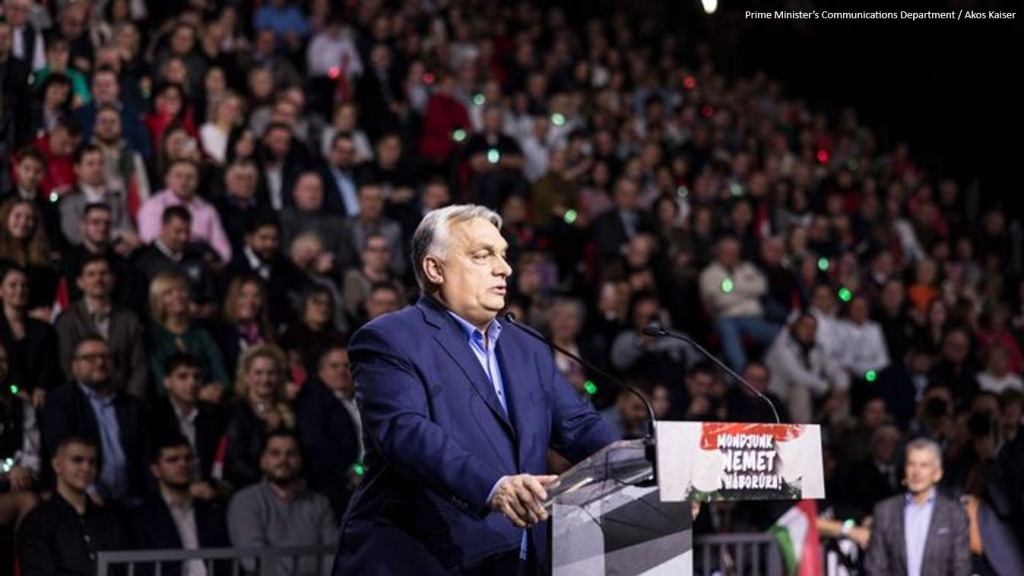
Orbán was responding to an audience question at the Miskolc digital civic circles' rally on 17 January 2025. By turns, condescending, disingenuous and plain prejudiced, Orbán’s response included an economic rationale for Roma ‘integration’ – some of it uncomfortably adjacent to economic arguments for inclusion made by a free-market Romani elite which envisages a role for the upcoming generation within the ranks of Europe’s precariat.
Orban’s shameless explication has the virtue of laying bare the irreducible racism that is a feature of his version of predatory capitalism. On the one hand, the future will value skilled workers the most, with great opportunities for Romani children and increased participation in ‘the work-based economy’. On the other hand, he warned that there are still plenty of problems, and there is no future without order, and if the Roma community wants a future, it must maintain order, for, as the leader of the nation cautions, this is no ‘fairy tale’:
“Undoubtedly, creating opportunities that require following norms must be implemented, and the latter often includes providing adults with basic life skills, from washing hands to making scrambled eggs. This is a socially inherited trait, to which many serious problems are added, starting with the industrially destructive drug trade in the poorest, most under-socialised Gypsy communities. There is no other option than to give the Gypsies a net instead of fish, so that they can stand on their own feet as self-reliant people and truly integrate”.
Where social reality collides with Orban’s ‘fairy tale’
The mix of condescending and crude racism with talk of economic self-reliance and integration is not just jarring, but basically predicated upon an entirely disingenuous account of economy and society in Hungary since 2010. Orbán’s version of the social contract with the Roma ran like this: “In 2010, we agreed that there will be work, but you have to go to work; we help with raising children, but you have to send the child to school.”
The reality was one of exploitative public works schemes, swingeing welfare cuts, and persistent school segregation, all delivered by a regime that regularly indulged in disparaging and racist rhetoric, and maintained discriminatory structures at the points of access and delivery of public services for Roma.
In terms of public service provision, researchers showed how government social policy provides high security for the non-poor, while its services are mostly inaccessible to the poor, making it “impossible for vulnerable, disadvantaged groups, and especially the children of these groups, to have the opportunity to improve their own situation”. In short, they conclude that Orbán’s social policy contributes “only to the reproduction of inequalities.”
Similarly, the European Commission’s 2025 Country Report on Hungary found that poverty outcomes remained worse than the EU average among children in large families, the low-skilled, the elderly, and the Roma population. In a country where poverty and social exclusion are on the rise, reversing long-standing positive trends, with children experiencing an increase in the depth of their poverty, the impact of social benefits has declined significantly since 2021 in terms of reducing poverty. The nominal value of the minimum income has not increased since 2012, while consumer prices have increased by 75% since then. Consequently, the adequacy of minimum income benefits is one of the lowest in the EU.
In sum, the Commission found that the situation for the poorest is worsened by the low progressivity of the tax system, the decreasing impact of social benefits, unequal access to basic and social services and the poorly targeted tax, housing and energy subsidy schemes, “By contrast, the highest income groups benefit from generous transfers.”
Social exclusion has long been compounded by racist discrimination, and the regime’s failure to protect the rights of Roma was highlighted in a dramatic resolution passed by the European Parliament in 2022, which effectively branded Hungary under Orbán as a rogue state. The resolution cited the deep alarm expressed by UN bodies by
“the prevalence of racist hate speech against Roma and other minorities, and reports that public figures, including at the highest levels, had made statements that may promote racial hatred; and at the presence and operation of organisations that promote racial hatred; as well as the persistence of discrimination against Roma and the segregation and extreme poverty that they face.”
So, while Orbán’s duplicitous talk of economic promise for Roma in the ‘Hungarian future’ is worthy of derision, when he promises to put the aspirations of the middle-class first, and before the fundamental rights of Hungary’s poorest Roma, know that he means it.