
SHOWTRIAL IN BUDAPEST: ANTIFASCIST MAJA T. SENTENCED TO 8 YEARS IN PRISON
04 February 2026
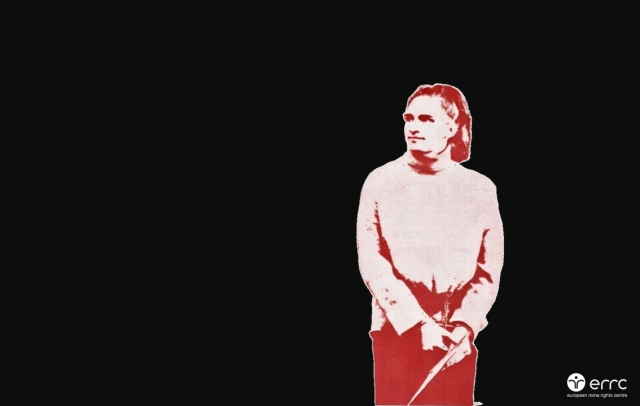
Accused of taking part in an anti-fascist assault on Neo-Nazis in Budapest for the ‘Day of Honour’ in 2023, Maja T. the 25-year-old non-binary antifascist from Germany, was sentenced to eight years in prison. The judge Jozsef Sos, who read out the verdict considered it proven that the accused was involved in attacks on suspected right-wing extremists.
Make no mistake, this was a show trial. Maja’s extradition from Germany was illegal. The defendant was repeatedly led into court bound and shackled. The prosecution evidence was flimsy. And this entire travesty has been purely political, with the far-right regime calling for harsh sentences.
In September 2025, Prime Minister Viktor Orbán, explicitly following the example of Donald Trump, designated antifa a terrorist organisation and “a menace to the citizens of Hungary.” The focus on antifa is seen as one more common cause uniting Trump and his European allies, “who were willing to emulate his culture war in their own countries.” Left German MEP Martin Schirdewan, said criminalising an anti-fascist group “simply plays the tune of the far right” and was “restricting freedom of opinion, as well as being ultimately an attack on democracy itself”.
Prior to the sentencing there was little expectation that justice would be done. Schirdewan, who visited Maja T. in prison several times, expected the worst after attending the court hearings, and that politics would trump justice, with the prosecution demanding the decision be “harsh and serve as an example”. Back in February 2025, Maja rejected the offer of a 14-year prison sentence in exchange for a guilty plea. The prosecution sought the maximum sentence of 24 years.
This seven-year stretch is by any measure harsh, and there can be no doubt of its purpose, on the back of the official antifa ban: to make an example of Maja, and send a message that there is no room for antifascist action or dissent in Hungary. And when it comes to freedom of assembly, to understand that the rights of those who celebrate and venerate Nazism take pride of place, and will be protected by the regime.
Flimsy evidence, unlawful extradition, appalling conditions
In his closing statement at the trial hearing in January 2026 , Maja’s defence attorney, Tamás Bajaky, described the video recordings of the attacks on Neo-Nazis, which were taken from public security cameras, “to be completely inadmissible as evidence.” In response to prosecution claims to have identified a masked person in one fragment as Maja, Bajaky stated: "This person passes by, turns around and leaves the scene again. This person does not have a rubber baton, does not attack or hit anyone and does not cause any injuries."
What has made this show trial even more controversial is the fact that the Federal Constitutional Court in January 2025, ruled that the decision by the Berlin Court of Appeal to allow for Maja’s extradition from Germany was unlawful. The Federal court expressly referred to the Charter of Fundamental Rights of the European Union and the associated ban on inhumane treatment. As reported in DW, the court enumerated:
“inadequate hygiene conditions, lack of access to hot water, bedbugs, poor and little food, extreme temperatures in winter and summer, poor lighting and ventilation in the cells, violence against prisoners by fellow prisoners and prison staff, and rule of law deficits.”
This ruling came too late for Maja, who was already in Hungarian captivity. Their father, Wolfram Jarosch, who traveled to Budapest at the start of the trial to offer his 24-year-old child moral support described the criminal proceedings as a "political trial", and told DW, that "the worst thing is the solitary confinement." Jarosch said that despite his child’s self-discipline and routines of physical exercise and reading, “Maja is suffering more and more under these conditions, both mentally and physically."
Maja – defiant and unbowed
In protest at the inhumane prison conditions, Maja T began a 40-day hunger strike on 5 June 2025, stating: "I can no longer endure the prison conditions in Hungary. My cell was under round-the-clock video surveillance for over three months. I always had to wear handcuffs outside my cell, for over seven months."
Left MEP Ilaria Salis, whose election in 2025, brought an end to nearly 16 months of detention in Hungary, where she faced similar charges concerning the Nazi Day of Honour
said:
“I remember all too well what it feels like to be dragged in front of your inquisitor, bound by a leash like an animal. To live confined within those walls, enduring daily humiliation and deprivation, cut off from the world and your loved ones. The conditions of detention and legal proceedings in Hungary are unbearable and fundamentally at odds with the basic principles of the rule of law. That is why Maja has begun a hunger strike — it is the only way to make her voice heard, to affirm her humanity and her rights. The German authorities must act immediately to bring Maja home.”
Last September, in a court appearance, Maja described how, against their will, they were forcibly stripped naked by six prison guards for refusing to take off their underwear, an experience they described as "degrading and inhumane". The statement issued in response from the Ministry of the Interior stated "From his broad smile and demeanour, it could be concluded that he was deliberately provoking the supervisors." The statement later explains that “the German prisoner,” Maja T., was receiving a visitor and that is why the prison guards had to strip them as part of a security measure. “She refused to comply with the request and passively resisted,” the Ministry wrote. “In order to eliminate the resistance, our staff used physical force and handcuffs,” but the statement clearly states that “the measure was proportionate, legal and professional, and no one was injured.”
Despite the cruelty and inhumane treatment, Maja has remained unbowed, and in a recent interview with DW, described growing up in eastern Germany, where the National Socialist Underground (NSU) neo-Nazi militant group was active, and witnessing discrimination, antisemitism, and racism at school.
Maja described antifascism as opposition to "totalitarian, authoritarian, nationalist" movements and organisations that, in their words, exclude people and promote violence; they denied being a member of any organized antifascist group; and called for solidarity to maintain hope in a shared search for truth, responsibility, and the will to act.
In an interview with Romea, Maja’s father stated “Whoever stands for Maja also stands for democracy and the rule of law while simultaneously standing against authoritarian and fascist tendencies. That is the stance we need to take today.”