
Systemic Failure: How North Macedonia Failed to Save Ramajana Asan
22 May 2026
By Judit Ignácz
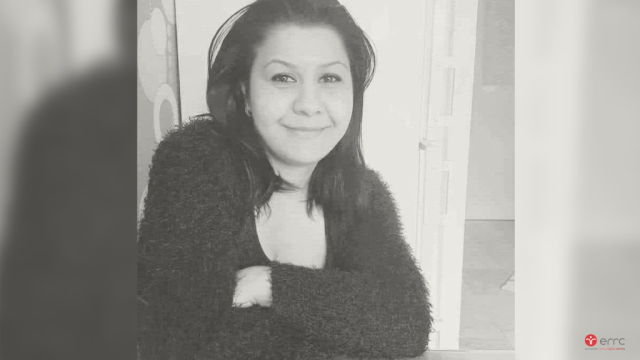
On 3rd May 2025, in Shuto Orizari, North Macedonia, Ramajana Asan, a 36-year-old Romani woman, was murdered by her partner in her own home in front of her five-year-old daughter. Nearly one year later, on 28 April 2026, the national quality Body issued its opinion in a complaint brought by the European Roma Rights Centre (ERRC) against the Ministry of Interior, assessing whether police inaction constituted intersectional discrimination on the grounds of ethnicity, gender, sex, and marginalisation.
The Commission concluded that the legal threshold for discrimination was not met and that intersectional discrimination was not established in the actions of the Ministry of Interior.
This was not an unforeseen failure of justice. A man had already killed a Romani woman after institutions failed to protect her. For many Romani women, seeking protection from violence means navigating institutions that often minimise their experiences, ignore warning signs, or treat their intersecting vulnerabilities as invisible. It is another painful example of how domestic violence can escalate fatally when institutions' responses are biased, delayed, or insufficient.
She asked for help “before it was too late”, but the system ignored her
According to testimonies from local Romani women’s organisations and advocacy groups, Ramajana Asan sought help from the police more than once before her murder. Even though authorities are obliged in domestic violence cases to assess risk, document indicators of abuse, and act where there is reasonable suspicion of any harm, in some instances, Ramajana's statements were not fully recorded and no formal criminal complaint or protective measures followed.
Across Europe, domestic violence cases repeatedly reveal similar patterns, particularly for racialised women at the intersection of poverty and social exclusion: prior contact with authorities is made and documented, warning signs are present and issued, conversations occur, and complaints may be registered. Institutions often treat these administrative steps as evidence that they fulfilled their obligations, even when those measures fail to reduce danger, prevent escalation, or provide protection. Their intervention delays until prevention is no longer possible, and the only remaining outcome is fatal.
The Burden of Survival Placed on Romani Women
A key part of the Equality Body’s reasoning focused on a documented incident from March 2020, in which Ramajana asked the police to only issue a warning her partner and did not pursue formal prosecution. This became central to the conclusion that institutional responsibility had not been engaged in a discriminatory way.
The continued reliance on victim-initiated protection is deeply troubling. This reasoning wrongly interprets hesitation as the absence of harm, withdrawal as resolution, and silence as safety. It shifts responsibility for protection onto the person at highest risk and assumes that the absence of a formal complaint means there is no danger.
Protection cannot depend on survivors repeatedly initiating procedures while living under threat. This is why the Istanbul Convention requires authorities to act in domestic violence cases even if the victim does not file or continue a formal complaint.
Feminist legal analyses, as well as survivor and trauma-centred approaches, have long rejected this approach. Women going through domestic violence may step back from formal processes not because violence has stopped, but because the conditions around them make continued engagement unsafe or impossible.
This may reflect fear, exhaustion, or emotional pressure, or knowing you were not taken seriously the first time. It may reflect the reality that the abuse was treated as a “private matter” considered typical of Romani families. It may reflect on previously experienced victim-blaming by police, social workers, or health professionals. Sometimes it might be the economic dependence on partners or the absence of safe housing, shelters, and effective protective measures. It could just be the quiet calculation that speaking out might make things worse, not better, including the forced removal of children.
Roman women often navigate all of this at once. They have a long history of being treated as less credible, less urgent, and less deserving of institutional care. Longstanding stereotypes against them, such as assumptions about unreliability, conflicts, or the “normalisation” of violence within Romani communities, influence how risk is assessed and how urgently cases are handled.
These discriminatory practices do not always appear as explicit refusal or overt, direct hostility. Research by the European Roma Rights Centre (ERRC) and the Association Initiative for Women’s Rights from Shuto Orizari documents systemic barriers Romani women face when seeking protection from domestic violence in North Macedonia, such as recurring patterns in which police discourage formal complaints or encourage reconciliation, repeated incidents are treated as isolated rather than cumulative, risk assessments are inconsistent, documentation and intervention are optional or delayed, warnings replace investigations, danger is systematically minimised and institutional follow-up are limited or absent.
What comes after
What remains after closure of domestic violence cases is often the absence of accountability, of meaningful protection, and of the life that could have been saved. The most painful truth is that by the time authorities take Romani women’s cries for help seriously, escalation has already occurred and frequently resulted in a fatality.
We are also left with questions: how many times must Romani women seek protection before their experiences are fully documented, properly assessed, and acted upon with urgency? How many warnings are ignored before institutions acknowledge that these deaths are not private, individual incidents, but the predictable consequences of systemic failures?
Cases like Ramajana Asan’s reveal a rotten and deeply biased system in which protection is often conditional, documentation is incomplete, and accountability is limited. They expose how racism, sexism, poverty, and social exclusion intersect to deepen the vulnerability of Romani women who will continue to be failed by the very systems responsible for protecting them. The systems that still frame domestic violence against Romani women as a private tragedy instead of what it truly is: a very public failure, shaped by discrimination, neglect, and the persistent devaluation of Romani women’s lives.