
"Would They Have Done the Same if He Wasn't Roma?" – ERRC Investigates Drowning of Disabled Romani Youth in Serbia
03 March 2026
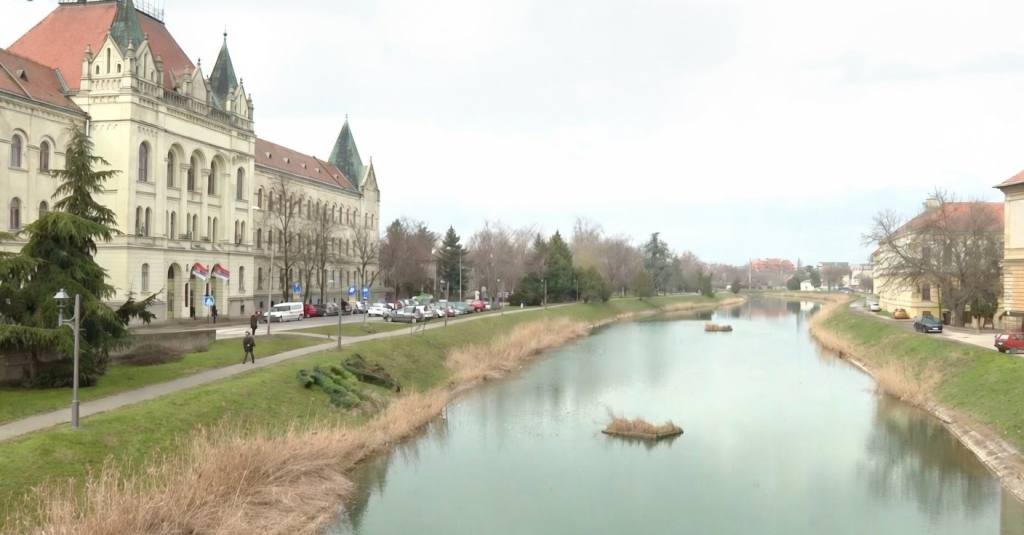
The European Roma Rights Centre has submitted a freedom of information request Lto Zrenjanin police following the disappearance and death of 19-year-old Manuel Ametov – a young Romani man with autism – amidst deep community distrust of the official account of events.
Manuel Ametov, a 19-year-old Romani man with developmental disabilities, went missing from his home in Zrenjanin, Serbia, on the night of 14th – 15th February 2026. Eight days later, his body was recovered from the town’s central lake. His family say they made clear to police from the outset that Manuel's developmental disabilities meant he was unable to navigate the world independently and he required urgent help.
The discovery of his body triggered immediate and sustained street protests in Zrenjanin, with residents blocking roads first to demand help in finding the young man, and then to demand accountability from the institutions that had failed him.
The European Roma Rights Centre (ERRC) has yesterday written formally to the Zrenjanin Police Department, as well as the Public Prosecutor, with a freedom of information request seeking to establish whether police acted in a non-discriminatory manner and in full compliance with Serbia’s obligations under international human rights law.
The Family’s Account
According to Manuel’s father, Samir Ametov, he reported his son’s disappearance on 14th February and immediately stressed that Manuel had developmental disabilities and required urgent help (as reported by N1 Info). He says he was initially told they must wait 24 hours before a search could begin. From that point, he alleges, the information he received from police was contradictory and unreliable.
“Everything they told me did not add up – not the footage, literally nothing,” Samir Ametov said publicly. “I am 100% sure and convinced that they started doing their job from Wednesday... And everything they told me was not from the first day. Now I don't know whether that was the second, third, fourth, or fifth day."
There was a Serbian public holiday on 15th February, the day after Manuel went missing, which was marked officially on Monday 16th and Tuesday 17th February (the third and fourth days after his disappearance).
While official institutions remained largely silent, the family, friends and residents of Zrenjanin organised their own search. Acting on information they gathered independently, they spent three days looking for Manuel in Subotica — without success and allegedly without coordinated official support.
Local activist Tara Rukeci voiced what many in the community were feeling: "There is actually a need somewhere to establish responsibility for why nobody organised, coordinated, or did anything to reduce the agony of the family – not just the family, because everyone who came out was thinking what if this happened to someone close to me?"
She also raised the question that has come to define the public debate: "Would they have acted the same way if it had not been a Roma child? That is the fundamental question. The community has been left to fend for itself. So, what then are all these institutions that were supposed to respond for?"
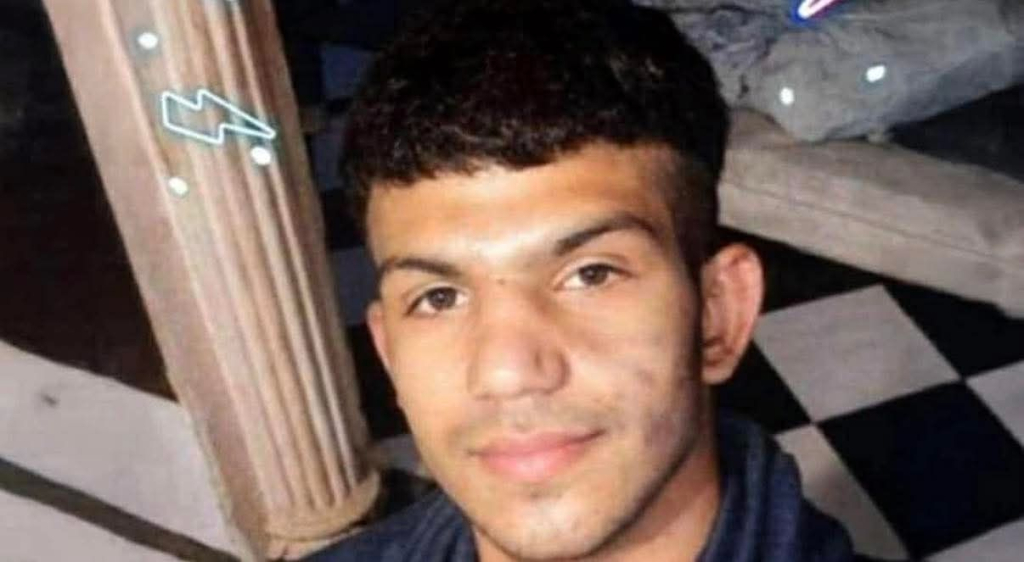 Manuel Ametov, aged 19 (Facebook)
The Disputed Police Version
The Serbian Ministry of Internal Affairs has subsequently issued a statement characterising public concern as “untrue speculation” and insisting that police had taken all necessary measures from the moment the disappearance was reported. According to the Ministry, officers issued a missing person notice on 15 February, interviewed the family and other potential witnesses, reviewed CCTV footage, deployed a drone, and conducted searches alongside civil protection services.
Police say they eventually identified Manuel on security camera footage from 15th February, moving near the lake. Knowing he had previously fallen into the same body of water, they deployed a gendarmerie diving team, which located his body.
The account the police have presented is not the account the community believes.
Srđan Šajn, president of the Roma Party, stated publicly that while police were informed of the disappearance in good time, a comprehensive search and the mobilisation of all available state resources did not follow. "We ask ourselves whether the reason [for the institutional reaction] is that Manuel Ametov comes from a poor family, that his parents are not part of the establishment, or that he is of Roma origin? It is possible it is a little of all of these things,” he said.
His party have additionally filed a criminal complaint with the Supreme Public Prosecutor's Office against the commander of the Zrenjanin Police Department, Branislav Todorović, and other employees of the department, according to news portal 021.rs.
A local councillor from the Party of Freedom and Justice, Slobodan Đurin, went further, alleging that when Manuel’s father demanded an urgent search, police responded that they could spare no more than two patrols to address a missing person case.
Manuel’s father has stated plainly: "I am seeking justice, obviously, and I have said publicly I will sue the chief of police."
Seeking the Truth Through International Law
It is precisely because of this gulf between the official version and the community’s lived experience that the ERRC is investigating. In a letter dated 2nd March 2026 the ERRC addressed the Zrenjanin Police Department (with a copy to the Basic Public Prosecution Office) to submit a formal freedom of information request under Serbian law.
The ERRC frames the case in terms of Serbia’s obligations under the United Nations Convention on the Rights of Persons with Disabilities (CRPD). Specifically, in relation to Article 5, which requires states to ensure equal and effective legal protection and reasonable accommodation of procedures for people with disabilities; as well as Article 11, which requires states to take all necessary measures to protect persons with disabilities in situations of risk.
The ERRC is asking police to provide a detailed timeline of all actions taken from the moment the disappearance was first reported, including the precise time of report, the time of first response, when and how a formal search was initiated, what resources were deployed, and whether specialist services and volunteer search teams were contacted and when. The organisation is also requesting copies of all internal protocols on missing adults, any specific guidelines addressing people with disabilities, and clarification of whether officers were informed of Manuel’s autism at the time of reporting, and if so, how that information was recorded and acted upon.
Additionally, the ERRC is seeking any internal review or disciplinary inquiry into the handling of the case, and five years of comparative data on response times in missing adult cases. The ERRC has made clear it is not simply seeking information; it is seeking accountability.
A Question of Discrimination and of Justice
The death of Manuel Ametov sits at the intersection of two characteristics that can be a source of vulnerability and that are frequently compounded in Serbia and across the region: being Romani, and having a disability. The ERRC’s investigation into the case reflects a concern that neither may have been adequately taken into account when the system was confronted with a young man who needed it most.
Whether police acted lawfully and without discrimination is precisely what the investigation seeks to establish. The Romani community of Zrenjanin has already reached its own conclusion. The ERRC is now asking the state to open its records and to prove otherwise.
The Freedom of Information request sent to the Zrenjanin Police Department by the ERRC is available here in English and Serbian.