
Roma Women Win European Case Against Slovakia for Police Violence and Discrimination
26 March 2026
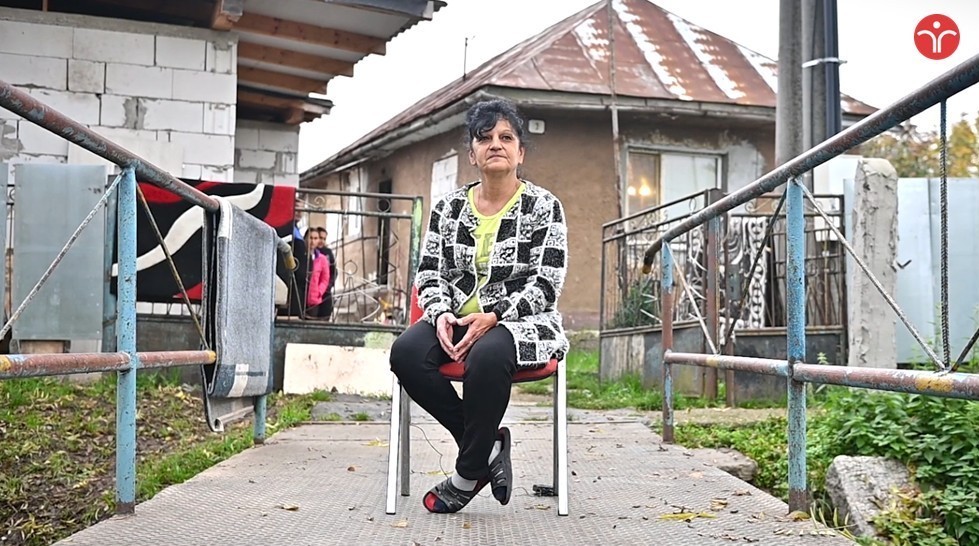
Brussels, Bratislava 26 March 2026: The European Court of Human Rights has ruled that the beating of two Romani sisters by Slovak police, their detention in a toilet and cleaning cupboard, and a deeply flawed investigation violated both the prohibition on inhuman treatment (Article 3 of the European Convention on Human Rights) and the prohibition of discrimination (Article 14 of the Convention). The Court ordered Slovakia to pay a total of €28,560 for the violations (€13,500 to Ms. Katarina Kuruová and €8,500 to Ms. Helena Horváthová in damages, as well as €6,560 in costs and expenses.) The judgment is another step toward accountability for anti-Roma police violence in Slovakia and a clear signal to Slovak authorities that racially motivated abuse by officers of the state cannot be concealed behind inadequate investigations. The case was brought by the European Roma Rights Centre (ERRC) and represented at a domestic level by Michal Zálešák, on behalf of the ERRC.
"This judgment provides small vindication for Katarína and Helena, and for every Romani person in Slovakia who has been beaten by police, called a Gypsy, and then told there is nothing to investigate or that the perpetrator cannot be identified” said the ERRC’s Legal Consultant, Michal Zálešák.
“The Court has seen through years of procedural evasion and named what this for what it was: inhuman treatment and racial discrimination. The domestic authorities had everything they needed to open a proper investigation into the abuse and the racist motivation and bring charges against those responsible, but they chose not to. The Court has held that this choice was itself discriminatory. That matters enormously for how such cases must be handled going forward across the region."
Facts of the case
On 23rd July 2019, Katarína Kuruová and Helena Horvathová, two Romani sisters living in Milhosť were arrested at the home of Katarína by a motorised police patrol due to an incident in the local bar involving their family members (another case currently pending before the European Court). Nine armed police officers of a special police unit and one officer with a police dog were dispatched to handle the women. The police were immediately violent on arrival. Katarína was grabbed by the hair, dragged across a bridge, struck multiple times, and had her hand twisted behind her back with such force that she sustained a fractured finger. Helena was pushed with a baton, kicked in the back, and slapped in the face. Both women were verbally abused by officers, who called them "cigáni" [Gypsies] and "morons." Upon arrival at the police station, Katarína was slapped again. The two women were then held not in police offices or interrogation rooms but in a cleaning cupboard and a men's toilet respectively for most of the night. No depositions were ever taken from them. Police also arrested Ms. Horváthová´s daughter (a minor) and brought her to the police station.
The police did not record the use of any coercive measures against the applicants. However, medical examinations the following afternoon confirmed that they had suffered injuries such as contusions, spine sprains, and the fractured finger. An independent expert concluded the injuries were consistent with the ill-treatment the applicants described.
A deeply flawed investigation
When the applicants filed a criminal complaint, the investigation was entrusted to the eastern unit of the Office of the Inspection Service, an authority based in the same building as the police structure to which the officers involved belonged. The investigation was ultimately suspended on the grounds of insufficient evidence to charge any individual, citing alleged inconsistencies in the applicants' accounts. The decision was issued, even though, during the identification parades, the applicants identified two officers who were supposed to have committed violent acts against them.
The domestic authorities declined to intervene, dismissing the applicants' complaint on procedural grounds.
The European Court has found that this process fell far short of what Article 3 demands. An investigation into alleged police ill-treatment must be independent, thorough, and effective. In this case it was none of these things: the investigation lacked structural independence from the outset; it failed to properly resolve the contradiction between the applicants' consistent and medically corroborated accounts and the denials of the officers involved; crucially, it wholly ignored the racist dimension of what had occurred.
The finding of racial discrimination
The Court's finding under Article 14, read in conjunction with the procedural limb of Article 3, is particularly important. During the arrest officers referred to the applicants as "cigáni", an explicit ethnic slur which should have immediately required the investigating authorities to examine whether ethnic hatred or prejudice motivated the violence. Moreover, the arrest reports referred to them as “a bunch of local Roma women” (“tlupa miestnych Rómiek”). However, no steps were taken to investigate whether the treatment of Katarína and Helena was connected to their Romani identity. The Court's judgment makes clear that this failure is itself a form of discrimination.
Systemic police violence against Roma
This judgment does not arise in isolation. Anti-Roma police violence in Slovakia has been documented extensively over decades by the ERRC and others. The ERRC has previously litigated cases of police brutality against Roma in Slovakia before domestic and European Court, and has consistently found the same pattern: violence, inadequate investigation, and impunity. The structural problem – the Office of Inspection Service investigating the officers operated from the same building as the unit to which those officers belonged – reflects a broader institutional failure. Internal police oversight in Slovakia has repeatedly proven inadequate in providing meaningful accountability when officers abuse Roma. The creation of an independent investigative body to address allegations of police misconduct is a first necessary step to addressing widespread systemic police racism towards Roma in the country.
The Kuruová and Horvathová v. Slovakia (Application no. 29229/22) judgment can be found here.
This press release is also available in Slovak.
For more information or to arrange an interview contact:
Jonathan Lee
Advocacy & Communications Director
European Roma Rights Centre
jonathan.lee@errc.org
+32 49 288 7679
Michal Zálešák (in Slovak)
Legal Consultant
European Roma Rights Centre
michal.zalesak@errc.org
+421 90 550 2785