Look Back in Anger: Roma Rights News Review of 2025
10 February 2026
Across Europe in 2025, the ever-growing far-right mobilisation against ‘ethnic replacement’, multiculturalism and minorities, meant that Roma continued to be singled out for collective blame and punishment by nativist politicians and neo-fascist mobsters. Beyond the hard core of haters, anti-Roma hate speech continued to contaminate the public sphere in a manner designed to inhibit any sense of solidarity or empathy. This snapshot review of stories covered in ERRC News in 2025, shows that anti-Roma racism remains undiminished and unabashed, despite a 20th Century history of erasure and genocide.
The message for the future is simple: it’s not enough to be non-racist, anti-racism must be the starting point; and those who choose to remain silent stand accused of complicity. This selection of stories from 2025 reminds us that days like these call for active resistance to racism and fascism. Siamo tutti antifascisti!
JANUARY
Czech Mayor resigns after racist comments
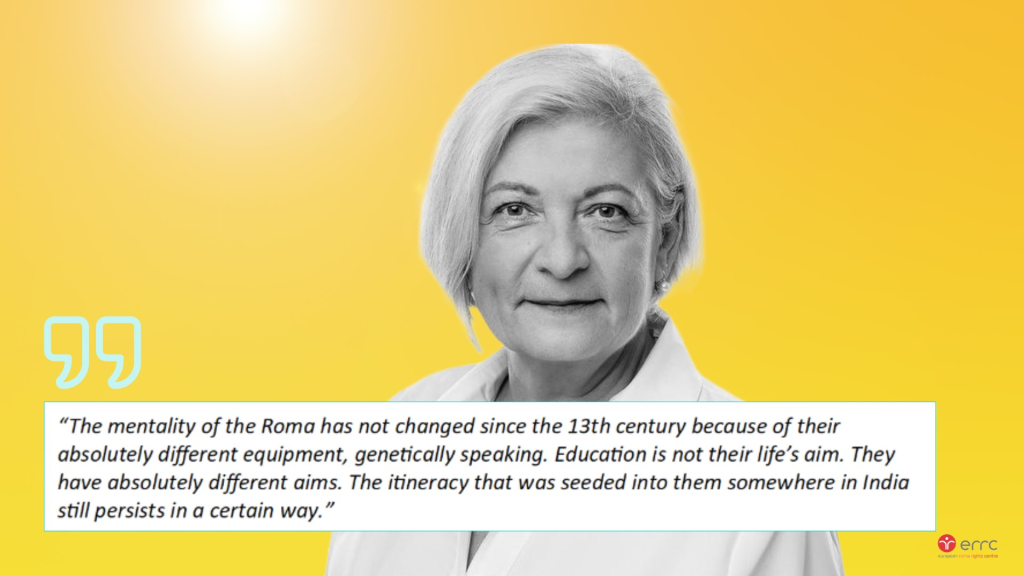
A new year controversy erupted in the Czech Republic, after Romea.cz reported racist remarks made by Alena Pataky, vice-mayor of the Municipal Department of Moravská Ostrava and Přívoz. Pataky, a member of the ANO party, and a ‘social educator’ said: “The mentality of the Roma has not changed since the 13th century because of their absolutely different equipment, genetically speaking. Education is not their life’s aim. They have absolutely different aims. The itineracy that was seeded into them somewhere in India still persists in a certain way.” Within a day, following the wave of criticism Pataky resigned her post on 6 January. For more see here.
Fatal encounter with police prompts calls for public inquiry
In January, ERRC News reported on the death of a 40-year-old Romani man following a struggle with arresting police officers in in the Hungarian town of Zagyvarékas. The ERRC demanded an independent investigation into the death of József Zsákai. In edited video footage of the incident broadcast on television, a police officer can be heard shouting “Stop, you motherfucker!”, and the police pursuing, grappling with, and handcuffing the man, who can be heard shouting “I’m sick, I can’t bear it”. Relatives dispute the police account, and told TV reporters that the police used excessive force and believed that the man was severely beaten, "kicked, sat on, squeezed the air out of him and shocked with a taser." The police chase and arrest operation was just down to the fact that officers knew József Zsákai was driving without a valid licence. For more see here and here.
FEBRUARY
European Court victory for Roma evicted from Wrocław camp in 2015
Almost a decade after the Roma camp in the Polish city of Wrocław was cleared of its inhabitants and demolished, the European Court of Human Rights (ECtHR) ruled on 6 February that there was a violation of Article 8 and awarded each of the five applicant households €5000. In the case of CALDARAR AND OTHERS v. POLAND the Court found, by a majority of five votes to two, that the applicants’ right to respect for their private and family life had been violated. For more see here.
90-year-old couple homeless in Milan after caravan bulldozed
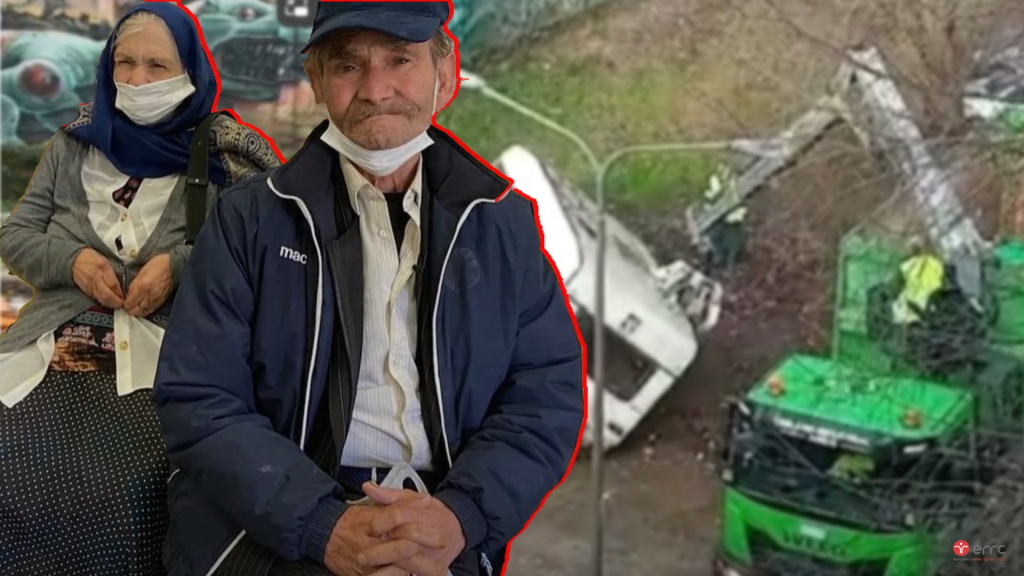
in what MilanoToday described as “a grotesque mix of bureaucracy, political propaganda and bad management”, bulldozers demolished a caravan belonging to an elderly couple, Bajro and Haijria. While a local councillor posted a gloating video celebrating the demolition, the 90-year-olds, who originally fled the war in Bosnia back in the 1990s, spent the night on the streets after their eviction, activated to make way for a dog-park. For more see here.
MARCH
31 Romani children found in ‘house of horrors’, police officer among eight arrested for trafficking
Shock waves swept across Bosnia following the revelation that eight people, including a police officer, were arrested on charges including human trafficking, after 31 Romani children under the age of 12 were found in a house. The ‘house of horrors’ story only came to light on the evening of 25 February 2025, after a ‘disoriented’ 12-year-old girl with two young children, approached a passer-by in the street for help, explaining that they did not want to go back to the house. For more see here.
Coercive sterilisation: Prague court victory for victims of coercive sterilization
In a landmark court victory, the Prague Municipal Court ruled that compensation for forced sterilisation can be awarded on the basis of a family member's testimony. The court overturned the rejection of a compensation claim by the Czech Health Ministry of a Romani woman, who was sterilised without informed consent back in 1981. As recounted by Romea.cz, the plaintiff described how in 1981, pregnant with her sixth child, her doctor pressured and eventually persuaded her to terminate the pregnancy. Immediately prior to the procedure, physicians suggested she also undergo sterilisation. According to her testimony, “They just told me it was birth control,” nobody explained to her what sterilisation actually meant, and nobody warned her that it was irreversible. For more see here.
Court rules power outages in Madrid shanty-town violate European Social Charter
In a ground-breaking decision, the European Committee of Social Rights (ECSR) concluded that Spain breached multiple elements of the European Social Charter. The Committee upheld a complaint lodged by NGOs that frequent power outages over a prolonged period rendered persons energy poor, thereby violating the Charter. The Committee ruled that access to energy is a prerequisite for the enjoyment of fundamental rights, and stressed that Spain and other states cannot outsource their human rights duties to private utility companies. FEANTSA called for immediate restoration of electricity for the rights-deprived and energy-poor residents of Cañada Real Galiana shantytown in Madrid, 54% of whom are Roma. For more see here.
APRIL
Controversy over Italian Eurovision star’s racist lyric
C'è chi dice: L'hanno preso gli zingari, e l'han portato in un campo fuori Roma. (Some say: The gypsies took him, and they brought him to a camp outside Rome). So sang Italy’s choice for the 2025 Eurovision, Lucio Corsi, in his off-kilter, bluesy-glam rock song ‘Altalena Boy.’ The 10-year-old track has recently re-emerged and made the national papers, putting the singer at the centre of criticism over his use of a racial slur and promotion of the dangerous and unfounded stereotype of Roma stealing Gadje children. For more see here.

Illegal mass demolition leaves 200 Roma homeless in ‘blatant violation of basic human rights’
On 15 April, dozens of families were left homeless by the mass demolition of their homes in the ‘Zaharna Fabrika’ district of Sofia. This action was taken by district mayor, Emil Branchevski, in collusion with the Ministry of Interior. As the bulldozers moved in, police with water cannon stood by to prevent any resistance.
In a statement, the Bulgarian Helsinki Committee (BHC) condemned the illegal demolition that took place in Sofia leaving over 200 Romani people on the streets amidst the rubble, and called for immediate action from the authorities to avert a humanitarian crisis: “What is shocking is not only the lack of any humanity in this deed, but also the arrogant violation of international law, the likes of which we have never witnessed before.”
The mass destruction of family dwellings was taken in blatant defiance of the interim measure imposed four days earlier by the European Court of Human Rights, which stipulated that no homes should be demolished until the state provided for the housing needs of those affected. For more see here.
MAY
Femicide in North Macedonia: Romani women’s network condemns state’s failure to protect
Outrage followed the femicide of Ramajana Asan a 36-year-old Romani Woman from Šuto Orizari was murdered by her partner in front of her five-year-old daughter in her home on 3 May 2025. Following the ERRC complaint submitted to the Equality Body against the Ministry of Interior, a joint message was sent by the Network for Support of Romani Women Ramajana to North Macedonian authorities which condemned police failures to act on the victim’s multiple reports of domestic violence, and stated that the case was emblematic of broader structural failures in the prevention of gender-based violence: “Romani women are among the most affected by violence and the least protected. In 2024 alone, 142 cases of domestic violence against Romani women were registered in North Macedonia.” For more see here.
Apartheid by stealth: shocking scandal of ‘Gypsy free’ village in Hungary revealed
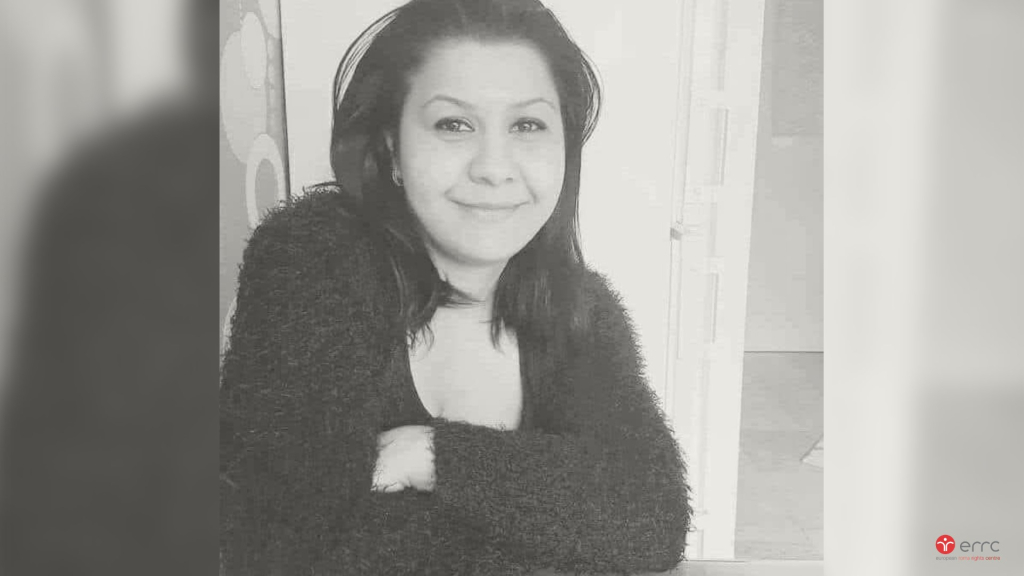
A shocking film report from Szabad Europa, revealed how, for almost 20 years the village of Teresztenye, in the north-eastern part of Hungary has remained ‘Gypsy free’, and what happened when a Romani family did move in. The local government stopped providing the children with transport to school; surveillance cameras recorded the husband László, being attacked and beaten by three men; n another incident a drunken man discharged a firearm behind the house. The family was also subjected to official and police harassment: a total of 14 official investigations, including six guardianship inspections. This has caused the family much stress and trauma, but the Sifters are not leaving, the wife Ági word: “I didn’t graduate from law school so that a mayor could decide where I can live or not.” For more see here.
Romani Family with Infant targeted by mob in arson attack in Serbia
A violent mob of around twenty individuals brutally attacked a Romani family in the Serbian village of Tavnik on 3 May 2025. In a coordinated attack, the perpetrators surrounded the home of the Gaši family and set fire to bales of hay outside the house while the family, including a ten-month-old baby, sheltered inside.
Romski glas za pravdu (Romani Voice for Justice), reported that the infant was physically attacked, as well other family members; and that the mob shouted ethnic slurs, cursed their “Gypsy mothers” and told them to “go back to Turkey”. For more see here.
JUNE
The Village of Roses and Beyond: The Fight Against Forced Evictions of Romani Communities in Italy
The Villaggio delle Rose (Village of Roses), known as the Chiesa Rossa formal camp in Milan, has been home to more than 250 Italian Roma for a quarter of a century. The Municipality of Milan decided unilaterally to close the camp on the grounds of urban safety, social hardship, and environmental criticalities. Visitors to the village including the ERRC found clean, organised, and well-maintained legal prefabricated homes, built through the labour and investment of a self-sufficient community of Romani families. Many of them are descendants of partisans and survivors of fascist deportations to concentration camps, and the village hosts Italy’s first monument commemorating the Romani genocide during World War II. It is a place of remembrance that welcomes schools, associations, and institutions to pay their respects every year on Holocaust Remembrance Day. For more see here.
Town Mayor and Five Residents Acquitted in Trial Over Illegal Eviction of Roma in Villeron, France
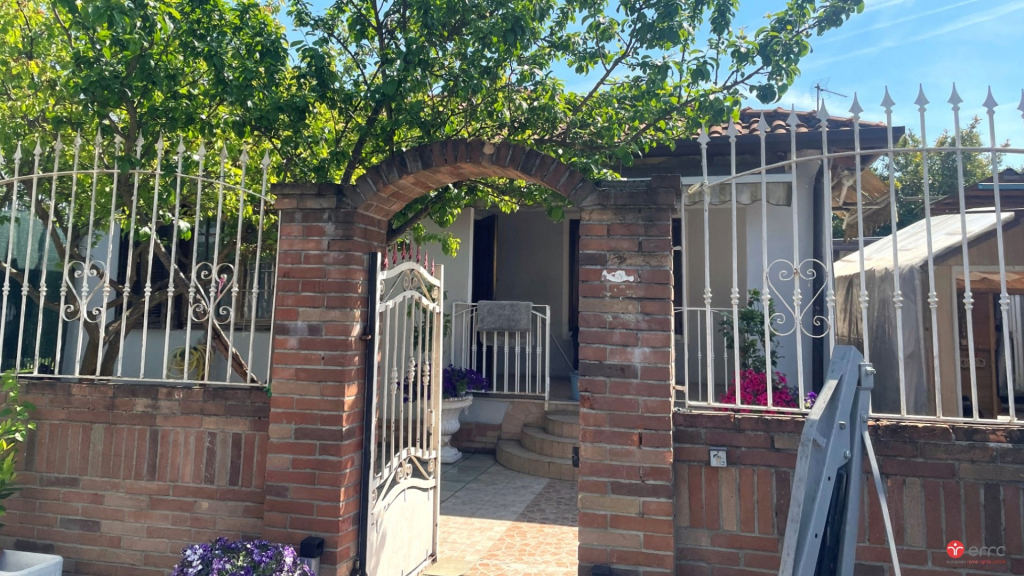
The mayor of Villeron and five residents who forcibly expelled Romani families from their makeshift homes were declared not guilty before the Criminal Court of Pontoise in late June. The Romani families first arrived in Villeron and began building informal homes in the wooded area by the town in September 2022. Although an expulsion procedure was already underway, the residents of Villeron decided to circumvent the civil justice system by organizing a demonstration aimed at forcibly removing the Romani families—totaling around 150 people—from their homes. On February 5, 2023, more than 200 villagers joined the violent protest. The protesters threw stones, physically intimidated the families, and shouted racist abuse, threatening to burn out the ‘parasites’. For more see here.
JULY
Apartheid by stealth: ERRC condemns Hungarian law on the ‘protection of local identity’ as discriminatory
The Hungarian Law on the Protection of Local Identity which entered into force on 1 July 2025, gives municipal authorities the right to adopt local decrees to defend their ‘fundamental right to self-identity’, to take action against ‘undesired directions of societal development’, and to determine who may move in to a locality, and who may not. This law basically provides a legal framework for racial segregation, and allows for the drafting of municipal decrees that systematically exclude Roma from taking up residence in towns and villages across Hungary. This is nothing less than apartheid by stealth, a deliberate move to create what fascists infamously termed ‘Gypsy-free zones’. For more see here.
AUGUST
Serbia: Violent police arrest leaves Romani basketball player with a broken arm
The ERRC filed a complaint on 12 August with the equality commissioner after Dragan Vasić, a twenty-five-year-old former Metalac basketball player and talent scout, sustained a broken arm during a police arrest for an unpaid traffic ticket in Valjevo. Vasić was accosted by the officers as he left his family home and presented with a warrant. As is common practice, he offered to pay the fine on the spot, but the police were having none of it. For more see here.
SEPTEMBER
Serbia: ERRC calls for investigation into alleged medical neglect of Romani mother resulting in stillbirth
On 9 September, the ERRC called for an urgent inquiry into allegations of criminal neglect by hospital staff,of Bojana Marković, following the tragic loss of her baby in the maternity ward of the Leskovac General Hospital on the evening of the 31 August 2025. Despite 24-year-old’s repeated complaints of intense pain she was not taken to the delivery room. When she first experienced labour pains, she reportedly received an injection to induce dilation. A CTG (foetal heart monitoring) scan taken at 17:30 showed the baby was still alive. Despite being in active labour and in extreme agony, her complaints of severe pain were reportedly ignored, and following a second CTG scan taken approximately two hours later, staff informed Bojana’s father and her husband that the baby had died. For more see here.
Family-friendly Hungary: Horrific reports of child abuse and neglect in state care facility
Shocking images of abuse and neglect from a children’s home – including one of an eighteen-month-old boy tied to a radiator with a scarf – were broadcast in a report by RTL’s Házon kíló on 17 August. The report, which revealed accounts of sexual and violent abuse of young residents by some staff, included images of teenagers sleeping on filthy mattresses, a five-year-old with a cut wrist, and smashed glass doors. For more see here.
OCTOBER
Toxic Neighbours: How a Chinese Mining Giant Endangers Romani Lives in Serbia
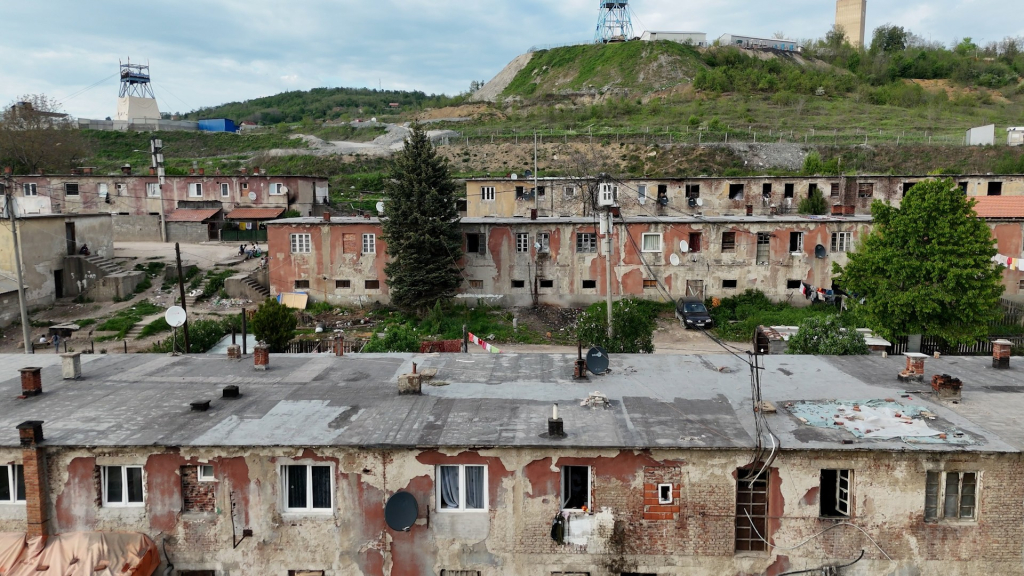
The city of Bor is home to one of the largest reserves of copper in the world, and home to more than 300 Roma who find themselves unwillingly at the heart of a tale of corruption, unscrupulous government contracts, and environmental degradation. Because the community is not part of the urban plan, they live without street lighting; waste management and electricity supply are inadequate; and the roads remain unpaved. Living on the edge of the mine, segregated and exposed to pollution, with the very ground beneath their homes eroded by continuous explosive detonations, their story exposes the sharp edge of environmental racism in Europe. For more see here.
NOVEMBER
Romani LGBTQ+ Activist Faces Criminal Charges for Organising Pride March in Hungary
Géza Buzás-Hábel, a young Romani teacher, human rights activist, and the leader of Diverse Youth Network, is facing criminal charges simply for organising an LGBTQI+ Pride event in Hungary. The event took place in Pécs on 4th October 2025, and was the first such event to take place outside Budapest, since the government banned Pride. On 7 November, Hungarian civil society organisations issued a joint statement accusing the prosecution of mounting a “politically motivated procedure” against Géza, aimed at discouraging people from exercising their right to peaceful assembly and dissent. For the ERRC interview with Géza see here.

Roma fear collective punishment & discrimination as Slovenia passes new ‘security’ bill
Romani communities across Slovenia have been living in a state of fear after an altercation outside a bar in Novo Mesto turned fatal, resulting in the death of 48-year-old man Aleš Šutar at the hands of a group of Romani men in late October. One 21-year-old Romani man has been held as a suspect. In the two weeks since then, a moral panic has overtaken the small Balkan country. The police have occupied Romani neighbourhoods, hate speech has run rampant, protests against ‘Roma criminality’ have been organised, and a new piece of legislation has been rushed through parliament to deal with the so-called ‘Roma problem.’ For more see here.
North Macedonia: Terrifying knifepoint ordeal for eight-year-old Romani victim of hate crime
The ERRC filed a complaint with the Ombudsman on 17 October following a shocking incident, where a traumatised and weeping eight-year-old boy was threatened, degraded, and forced at knifepoint by two adult perpetrators to kneel and kiss their shoes. This atrocious incident, which took place in early November in the city of Strumica, was recorded by the attackers, and disseminated on Facebook. Subsequently, the authorities reportedly identified both men and placed them under house arrest. For more see here.
DECEMBER
ERRC calls for urgent action after winter power-cuts hit Roma in Serbia
At the onset of winter, the authorities cut the power supply to the Romani community Crvena Zvezda in Niš, leaving dozens of families once again exposed to the elements in degrading and perilous living conditions. The ERRC and Group for Children and Youth ‘Indigo’ have called on the mayor to immediately restore the electricity supply to the affected families to prevent further harm in winter. This sudden decision to cut the electricity has deprived these families of the means to heat their homes, prepare food, store medication, or maintain minimal hygiene. For more see here.
Hungary bans ‘Antifa’ and deletes 12 Years of Roma Rights Reports
Only weeks after issuing a decree proscribing ‘Antifa’ as a terrorist organization, Hungary’s Office of the Commissioner for Fundamental Rights (AJBH) deleted from its website 12 years of reports detailing anti-Roma racism and discrimination. These actions are part of a growing, deliberate effort to increase state control over dissent and remove accountability. For more see here.